
















CONTENTS
Formaldehyde is a known human carcinogen. If that sentence makes you wonder whether it belongs in your baby's clothes, you're asking exactly the right question a lot of parents ask.
Let’s start with the history. Formaldehyde has been used in the textile industry for decades. It helps fabrics resist wrinkles, hold their shape during shipping, and arrive looking crisp on store shelves. It is also classified by the International Agency for Research on Cancer (IARC) as a Group 1 carcinogen, the same category used for substances where there is sufficient evidence that they can cause cancer in humans.
Those two facts deserve to be taken seriously, but they’ve got to be understood with context.
The conversation around formaldehyde in clothing is often reduced to two extremes. One side insists there is nothing to worry about because the amounts found in clothing are low. The other implies every new piece of clothing poses a major health risk. However the truth is nuanced and needs to be understood.
Formaldehyde can be present in baby clothes, particularly those treated to resist wrinkles or creasing. The documented health concern from clothing is primarily skin irritation and allergic contact dermatitis, especially in babies with eczema or sensitive skin. At the same time, formaldehyde is a chemical that regulators, certification bodies and manufacturers have spent decades trying to reduce because of what we know about its broader health effects. A single wash removes most free formaldehyde, which is the form most easily released from new clothing. Some bound formaldehyde can remain because it is chemically attached to wrinkle-resistant finishes and may continue to release small amounts over time. That is why washing is important, but choosing GOTS or OEKO-TEX certified clothing is even better because these standards prohibit or strictly limit formaldehyde finishes during manufacturing.
In this article, we'll look at why formaldehyde ends up in baby clothes, what the science actually says about the risks, how much is typically found in children's clothing today, and the practical steps that reduce exposure without making shopping super complicated.
Why Is Formaldehyde Used in Baby Clothes?
 One of the questions I had as a parent researching formaldehyde was: why the heck was it ever added to clothing for kids in the first place?! Unfortunately, as always, the answer is closely related to profits: manufacturers wanted fabrics that were easier to sell.
Cotton wrinkles. It creases during shipping. It can shrink. It absorbs moisture, which creates challenges when garments spend weeks travelling through humid shipping containers before reaching warehouses and stores.
Beginning in the 1920s, the textile industry started using formaldehyde-based resins to solve those problems. The finishes helped fabrics resist wrinkles, recover their shape after washing, lock dyes into the fibres and reduce mildew during transport. Over time, they became common in clothing marketed as wrinkle-free, permanent press, easy care, non-iron and crease-resistant.
Those claims still matter today because they often tell you more than the fiber label. A 100% cotton garment can still contain chemical finishes. Cotton tells you what the fabric is made from. It tells you nothing about what happened to that fabric after it left the cotton field.
Many parents also notice a strong chemical smell when opening a package of new clothes. Some even like that chemically smell.
That smell is not formaldehyde itself in every case. New clothing can release a mixture of volatile organic compounds from dyes, printing, packaging and textile finishes. Formaldehyde-based resins can contribute to that smell, particularly when garments have been heavily treated to resist wrinkles or creasing.
Either way, a strong chemical odor is a good reminder that clothing goes through an enormous amount of processing before it reaches your child's dresser. And it’s also a reminder to wash it before dressing your kiddo in it!
Is Formaldehyde in Baby Clothes Really Dangerous?
The International Agency for Research on Cancer classifies formaldehyde as a Group 1 carcinogen because there is a decent amount of evidence that long-term exposure can cause cancer in humans. Research has linked repeated inhalation of formaldehyde to cancers of the upper respiratory tract, particularly nasopharyngeal cancer, and some evidence also supports an association with leukemia in occupational settings.
Those findings should not be dismissed simply because they involve workers rather than consumers. They are the reason governments, certification bodies and manufacturers have spent decades reducing formaldehyde exposure across multiple industries.
Clothing represents a different type of exposure.
People are not breathing concentrated formaldehyde vapors from baby clothes in the same way factory workers inhale airborne formaldehyde during manufacturing. Instead, clothing creates prolonged skin contact, sometimes for ten or twelve hours a day, particularly in babies who spend much of their lives in sleepers, onesies and pajamas.
Research on clothing has therefore focused on a different outcome.
The U.S. Government Accountability Office (GAO) reviewed the available evidence in 2010 and concluded that while formaldehyde levels in clothing generally appeared to be low, allergic contact dermatitis was something that needed to be considered. Babies with eczema or particularly sensitive skin are more likely to develop redness, itching or irritation from textile finishes than babies without those sensitivities.
As a parent, the way I see it, there is very little downside to reducing exposure to a chemical that serves no purpose once a garment reaches your home. The wrinkle-resistant finish may have helped the manufacturer ship the clothing across the world without creasing. It does not provide any meaningful benefit to your baby and if it could be irritating or harmful, why would I want it?
Why Babies Deserve the Strictest Standard
 So why is it we are so concerned about babies’ skin?
There is a scientific reason. A baby's skin is thinner and more permeable than an adult's, making it easier for chemicals and irritants to pass through the skin barrier. Babies also have a much higher surface area relative to their body weight, meaning any exposure represents a proportionally larger dose than it would for an adult.
Then there is simple reality: adults wear a shirt for a few hours before changing clothes while babies spend most of the day surrounded by fabric. Onesies. Sleepers. Pajamas. Swaddles. Bibs. Blankets. Burp cloths. Car seat straps. They also explore the world by putting everything within reach into their mouths.
Textiles are one of the things babies interact with more than almost anything else.
That is why countries that regulate formaldehyde in textiles almost always create a separate category for infant clothing with much stricter limits than those applied to adult garments.
How Much Formaldehyde Is Found in Baby Clothes?
A 2022 study published in the journal Toxics analyzed baby and maternity garments sold in Europe to measure formaldehyde before and after washing.
Researchers detected formaldehyde in approximately 20 percent of the garments tested. Among the positive samples, concentrations averaged about 9 mg/kg, levels that were generally low but demonstrated that formaldehyde residues do still appear in a minority of baby clothing.
Then the researchers washed every garment once.
Formaldehyde became undetectable in every single sample.
A separate European survey reached a remarkably similar conclusion. Researchers found that around 11 percent of garments intended for children under two released formaldehyde above the level that should be non-detectable before washing. After a single wash cycle, formaldehyde release fell by approximately 90 percent. That is an unusually clear finding in environmental health research.
Parents are often told to wash new baby clothes before the first wear, but very few people explain why.
This is the reason.
One observation from the 2022 study is also worth mentioning because it challenges another common assumption. The researchers found that garments carrying general "eco" labels actually contained slightly higher average formaldehyde levels than conventional garments in their sample. This was a relatively small study, so it should not be interpreted as evidence that environmentally marketed clothing is worse. It does illustrate something important, though.
The word "eco" is a marketing claim. A certification with a measurable chemical limit is something entirely different.
Does Washing Remove Formaldehyde?
For formaldehyde, washing provides a significant amount of protection.
The Toxics study found that one normal wash reduced formaldehyde to undetectable levels in every garment tested. European regulatory testing found approximately a 90 percent reduction after a single laundering cycle.
Very few chemical exposures have such a simple solution.
Wash new baby clothes before the first wear using your normal detergent. If your baby has eczema or particularly sensitive skin, an extra rinse cycle is a sensible precaution.
The next question is how to choose clothing that starts with lower formaldehyde levels in the first place. That is where marketing claims stop being useful and independent certifications become far more valuable.
How to Spot (and Avoid) Formaldehyde Finishes
One of the frustrating things about formaldehyde is that brands are not required to tell you whether they have used it.
Unlike food, clothing does not come with an ingredient list. That means parents have to work backwards. The easiest place to start is with the marketing.
Certain claims have historically been associated with formaldehyde-based resins because those finishes are designed to change the way fabric behaves.
Pay particular attention to clothing described as:
-
Wrinkle-free
-
Permanent press
-
Non-iron
-
Easy-care
-
Crease-resistant
-
Shrink-resistant or shrink-proof
None of those claims automatically mean formaldehyde has been used.
Many manufacturers have developed lower-formaldehyde or formaldehyde-free technologies over the past two decades, particularly as consumer awareness has grown. At the same time, these finishes remain one of the biggest clues that a garment has undergone additional chemical processing beyond simply being woven into fabric.
Your nose can sometimes offer another clue.
A strong chemical smell when you open a package does not prove formaldehyde is present. New clothing can release a mixture of volatile compounds from dyes, printing inks, packaging adhesives and textile finishes. Formaldehyde can contribute to that smell, but it is rarely the only chemical involved.
Either way, clothing should not smell like a chemistry lab. A wash before first wear is good practice regardless.
Choose everyday clothing that has no reason to need wrinkle-resistant chemistry in the first place. A plain organic cotton onesie does not need to repel wrinkles while sitting in your baby's dresser.
The Certifications That Set a Limit
The United States presents an unusual problem.
Despite formaldehyde being one of the most studied textile chemicals, there is no mandatory federal limit for formaldehyde in clothing sold in the U.S.
The Consumer Product Safety Commission reviewed formaldehyde in textiles during the 1980s, when much of the clothing sold in America was still manufactured domestically. By 2010, the Government Accountability Office (GAO) noted that apparel production had largely moved overseas while the regulatory approach had changed very little.
That is one reason independent certifications have become so important.
Rather than relying on voluntary claims from brands, they establish measurable limits that manufacturers must meet.
OEKO-TEX Standard 100
If you are buying clothing for babies and toddlers, OEKO-TEX Standard 100 Class I is one of the strongest certifications available. Class I applies to products intended for children up to 36 months of age.
For formaldehyde, the requirement is straightforward.
It must be non-detectable, approximately 16 mg/kg, depending on laboratory detection limits.
For comparison, OEKO-TEX allows 75 mg/kg for general clothing that comes into direct contact with skin and 300 mg/kg for products without direct skin contact.
That difference tells you everything you need to know about how seriously infant exposure is taken.
GOTS
The Global Organic Textile Standard (GOTS) approaches the issue from a different direction.
Rather than simply testing the finished garment, GOTS restricts what manufacturers are allowed to use throughout production.
Formaldehyde-based anti-crease finishes are prohibited, and finished products must remain below strict residue limits of approximately 20 mg/kg.
GOTS also covers organic fiber content, dyes, auxiliaries, wastewater treatment and social criteria throughout the supply chain.
It is one of the reasons I often describe GOTS as a manufacturing standard rather than simply an organic cotton certification.
Internationally, several countries already regulate formaldehyde in infant textiles far more directly than the United States.
Japan's Law 112 requires formaldehyde to be non-detectable in textiles intended for children under two years old. China's GB 18401 Category A standard limits formaldehyde in infant products to 20 mg/kg.
Those regulations reflect something most scientists and regulators already agree on.
When clothing is designed for babies, lower is better.
Why Treehouse Baby Clothes Avoid the Problem
One of the biggest lessons I learned while researching textile manufacturing is that parents spend far too much time trying to decode marketing.
Organic.
Natural.
Eco.
Safe.
Clean.
Most of those words have no legal definition.
The certifications behind them do.
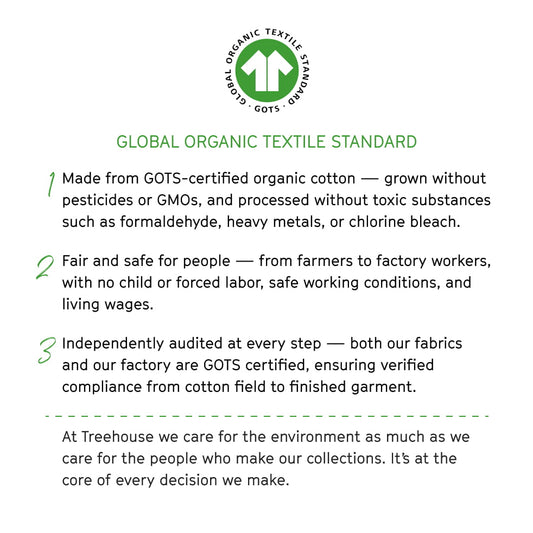
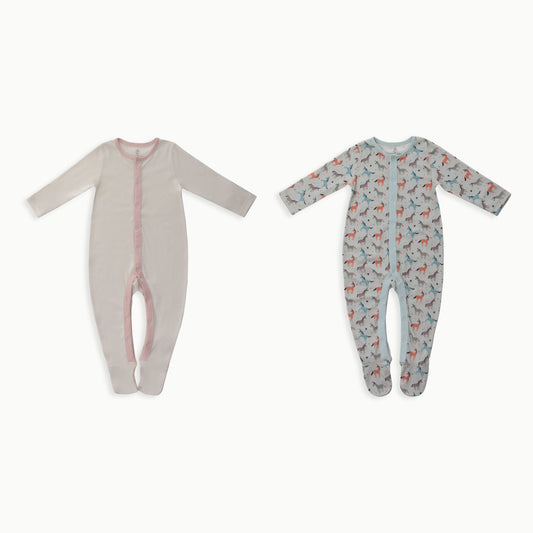
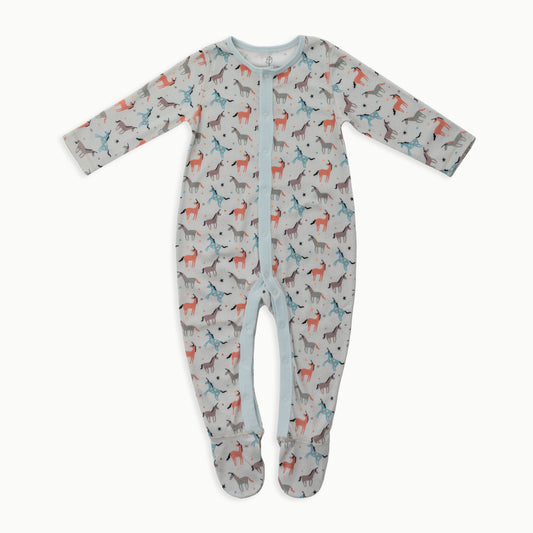
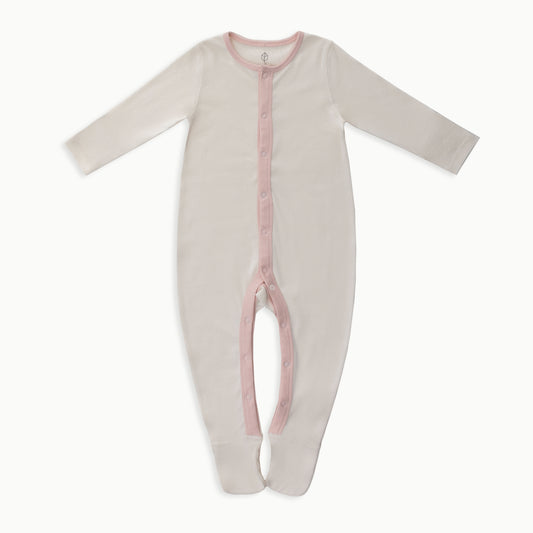
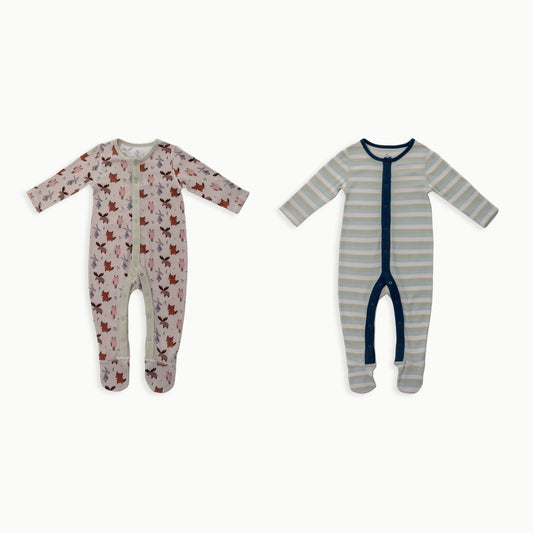
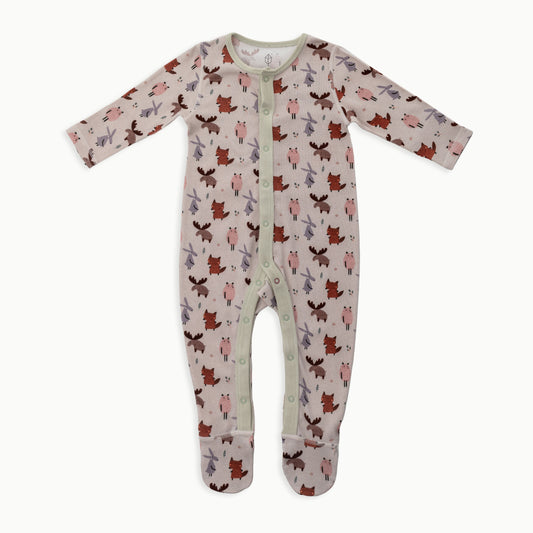
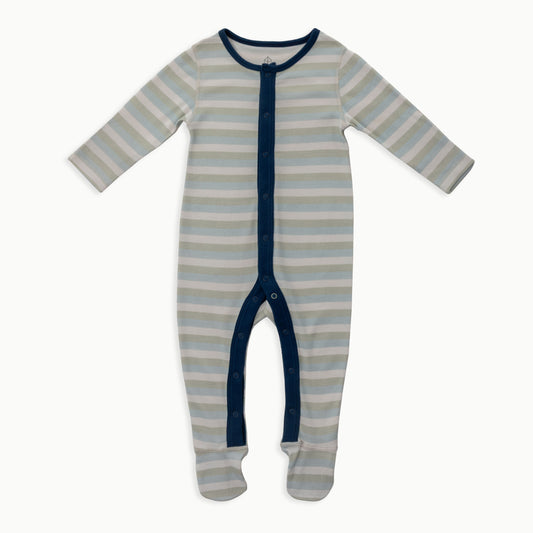
At Treehouse, every piece in our organic cotton collection is made using GOTS-certified organic cotton, while our linen pieces are made from OEKO-TEX Standard 100 certified linen.
That means the standards themselves prohibit or strictly limit formaldehyde finishes before the clothing ever reaches your child's closet.
There is no wrinkle-resistant resin to wash away because it was never added in the first place.
We also avoid the features that traditionally drive formaldehyde use.
You will not find permanent-press treatments or easy-care chemical finishes in our collections.
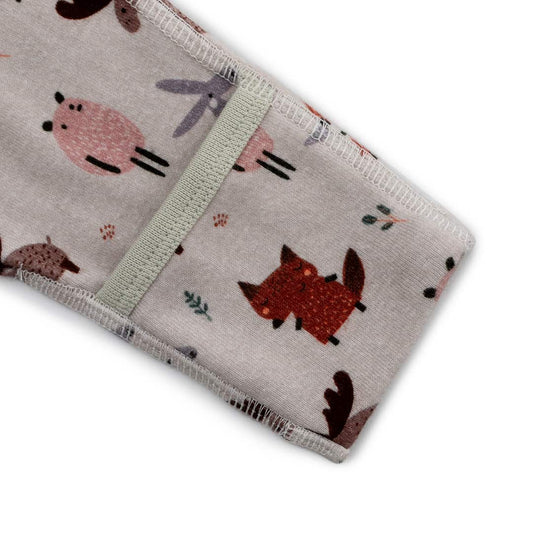
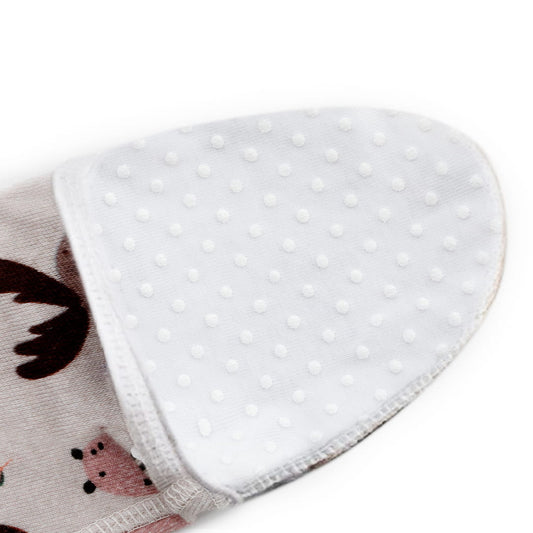
Instead, we rely on thoughtful construction, heavier-weight fabrics, water-based dyes, flat seams, tag-free labels and fibres that soften naturally with washing rather than through chemical treatments.
Organic cotton wrinkles.
So does linen.
Personally, I see that as evidence the fabric is behaving exactly the way nature intended.


