



CONTENTS
If you’re new to merino wool socks, there’s a good chance your first question is: Can I wash them? Followed closely by: Are these going to shrink the second I wash them? The short answer: Yes, you can and absolutely not, as long as you follow a few simple, parent-proof steps.
Merino wool is one of the most low-maintenance natural fibers you can choose. It’s soft, breathable, temperature-regulating, and naturally odor-resistant, which means fewer washes, less laundry, and a smaller environmental footprint than synthetic socks that require frequent washing.
With the right care, merino socks stay soft, clean, and durable for years, helping you buy less and wear longer (even pass them down to siblings), one of the easiest sustainability wins a family can make.
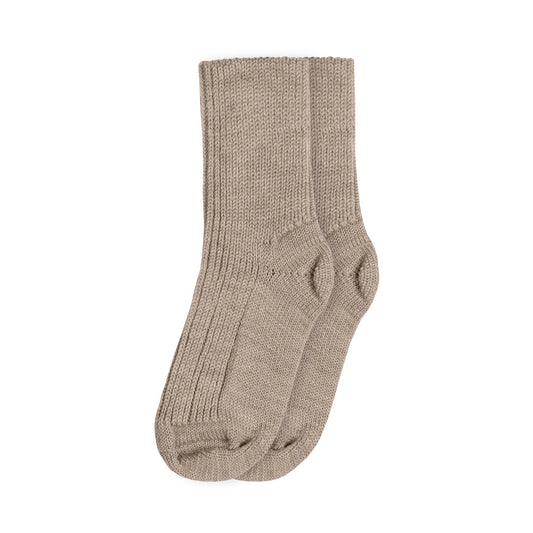
If you're building a natural-fiber drawer for your child, explore our merino wool socks for kids designed for comfort, longevity, and sensitive skin.

What Makes Merino Wool Different From Regular Wool
Merino wool comes from Merino sheep, whose fibers are much finer and softer than standard wool. This is why merino feels gentle on a child’s skin instead of scratchy, and why parents who switch often say they’re never going back.
Why merino needs gentler washing
Merino fibers have a natural crimp and elasticity that help them stretch, bounce back, and regulate temperature. When exposed to high heat or aggressive agitation, those fibers can interlock (felting), which leads to shrinking. But handled gently, merino lasts far longer than most cotton or synthetic options, another quiet sustainability advantage.
Merino’s natural benefits support a lower-impact lifestyle
-
Naturally antimicrobial → doesn't trap odor, meaning fewer washes
-
Breathable → dries quickly
-
Fully biodegradable
-
Renewable and, when sourced from us, mulesing-free from responsible New Zealand farms
-
Releases no microplastics into waterways (unlike polyester or acrylic socks)
Superwash vs. Non-Superwash Merino: What Parents Should Know
Many parents don’t realize there are two types of merino, and it matters when washing.
Superwash Merino
-
Treated so fibers don’t interlock as easily
-
More machine-wash friendly
-
Less risk of shrinking
-
Great for families who want convenience
Superwash treatment also helps extend the life of the sock, and because merino is a natural fiber, it still avoids the microfiber shedding that synthetic socks release.
Non-Superwash Merino
-
Pure, minimally processed wool
-
Ultra-breathable and soft
-
Requires gentler laundering
-
Best washed by hand or on a true wool cycle
Some families prefer non-superwash from a purity and biodegradability standpoint, but both types outperform synthetics on sustainability and comfort.
Merino vs. Synthetic Socks
Synthetic socks often:
-
Trap odor
-
Require more frequent washing
-
Shed microplastics
-
Wear out quickly
If you want to understand why synthetics are harder on skin and the environment, read the disadvantages of synthetic fibers
How to Wash Merino Wool Socks by Hand

Hand washing is ideal for:
-
Non-superwash merino
-
Baby sizes
-
Looser knits
-
Families prioritizing the longest possible lifespan
Step-by-step:
-
Fill a basin with lukewarm water.
Avoid hot water, as it shocks fibers and shortens garment life. -
Add a wool-safe detergent.
Wool-safe detergents are typically biodegradable, lower-impact, and gentler on waterways. -
Submerge socks and press gently.
Think press and release, not scrubbing. Gentle care = longer-lasting socks. - Soak for 10–15 minutes.
-
Rinse in lukewarm water.
Matching temperatures prevents felting. -
Press out water using a towel.
Never wring. Wringing distorts fibers and reduces longevity.
This method uses almost no energy, very little water, and extends the life of the garment, all small but meaningful sustainability wins.
Machine-Washing Merino Wool Socks

Machine washing is safe for superwash merino, and often okay for non-superwash if your machine has a reliable wool cycle.
How to machine wash sustainably:
-
Use a mesh laundry bag.
Reduces friction and prevents stretching, extending the life of the socks. -
Choose a cold or lukewarm cycle.
Cold water washing dramatically reduces energy consumption. -
Select “delicate,” “gentle,” or “wool wash.”
These cycles minimize agitation and protect fibers. -
Use a mild, wool-safe detergent.
Avoid formulas with enzymes, optical brighteners, or harsh chemicals; better for wool and waterways. -
Never use fabric softener or bleach.
Softener coats wool fibers, reducing breathability.
Bleach breaks them down entirely.
Common Mistakes That Damage Merino Wool
Avoiding these helps your socks last significantly longer, reducing textile waste and replacement frequency.
-
Washing in hot water
Causes wool to felt and shrink. -
Using the dryer
High heat damages elasticity and shortens lifespan. -
Aggressive scrubbing or wringing
Distorts fibers and stretches socks out. -
Washing with rough fabrics
Towels, jeans, and zippers can cause abrasion. -
Mixing with synthetics that pill
Synthetic microfibers cling to wool and reduce breathability.
(Fun fact: merino sheds zero microplastics, synthetics shed millions.)
If your child is hard on socks, keep a few organic cotton kids' socks in rotation for playground-heavy days to help your merino pairs last even longer.
Drying Merino Wool Socks the Right Way
Drying is where most accidental shrinking happens.
-
Always air dry
Lay your socks flat on a towel or drying rack.
Air drying uses no energy and preserves elasticity. -
Avoid hanging
Hanging wet wool stretches the fibers, especially in larger child sizes. -
Keep away from direct heat
Radiators, dryers, or heaters can cause shrinkage. -
Expect faster drying times
Because merino is naturally breathable, it dries surprisingly fast, another convenient and eco-friendly perk.
How Often Should You Wash Merino Wool Socks?
Here’s where merino truly shines: you do not need to wash it after every wear.
This is both parent-friendly and planet-friendly.
Why?
-
Merino is antimicrobial
-
Odor-resistant
-
Moisture-wicking
-
Breathable
For most children:
-
Every 3-4 wears is typical.
-
For toddlers with super active feet: every 2-3 wears.
-
For newborns: more frequent changes, but not necessarily full washes every time.
Between washes, air out your socks by placing them outdoors when dry or on a windowsill.
If your baby needs more frequent sock changes, consider rotating
If your baby needs more frequent sock changes, consider rotating with organic cotton baby socks to extend the lifespan of your merino pairs.
Washing less frequently means:
-
Less water
-
Less energy
-
Less detergent
-
Longer-lasting socks
-
Lower overall footprint
A rare win-win in parenting.


