






CONTENTS
If you’ve ever stood over your baby’s crib wondering whether they’re warm enough, or debated whether tonight is the night to finally introduce a blanket, you’re not alone. This is one of THE most common questions parents of babies ask.
The good news: understanding when a baby can sleep with a blanket comes down to simple developmental milestones and well-established safety guidance. This guide will walk you through what the experts recommend, why the age matters, and what to use instead until your little one is ready.
When blankets do become appropriate, choosing the right kind (like breathable organic cotton baby blankets) can make all the difference.

The Short Answer: When Experts Say a Blanket Becomes Safe
If you're wondering at what age a baby can sleep with a blanket, the guidance is refreshingly consistent. Most pediatric authorities recommend waiting until after 12 months.
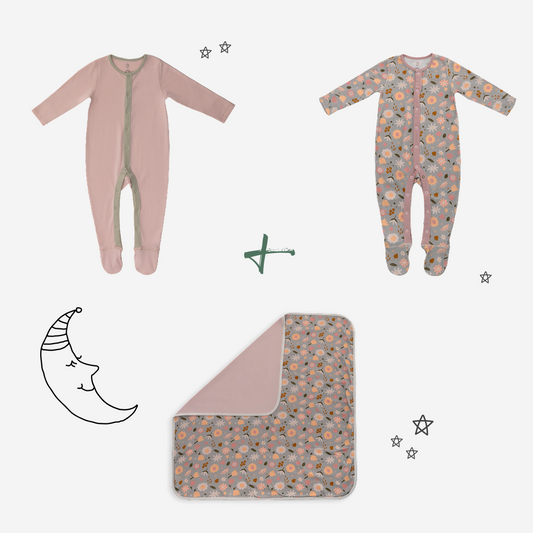
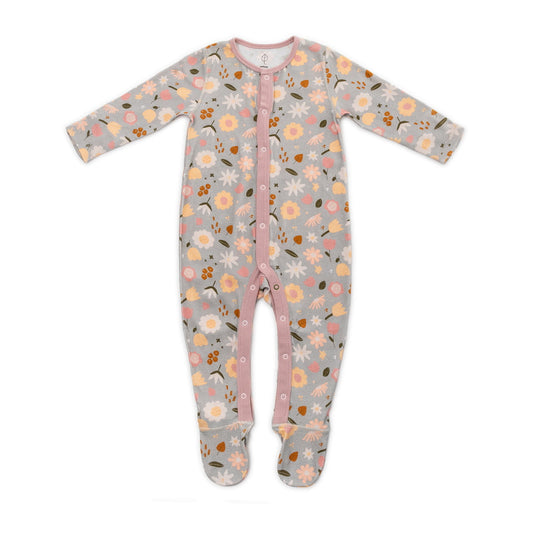
The American Academy of Pediatrics advises keeping soft bedding, including pillows, loose blankets, quilts, and stuffed toys, out of your baby's sleep area, and notes that most experts agree these items pose little risk to healthy babies only after 12 months of age. The CDC and the NIH's Safe to Sleep program give the same advice, recommending sleep clothing like a one-piece sleeper or a wearable blanket instead of a loose blanket through the first year.
Why the wait?
The first twelve months are a period of fast motor development. Before a baby can reliably roll, lift their head, or move fabric away from their face, loose bedding is linked to a higher risk of suffocation, entrapment, and strangulation, which is exactly why keeping soft objects out of the crib is one of the AAP's core safe-sleep recommendations.
This doesn't mean your baby has to be cold. It means safer alternatives, a well-fitting sleep sack or breathable layers, take priority during the first year.
Why Blankets Aren’t Recommended for Babies Under 12 Months

Parents often assume the risk is only that a blanket will cover a baby’s face. That’s part of it, but it’s actually not the whole story.
Younger infants are more vulnerable to loose bedding because:
👉 Their mobility is still limited.
Before 12 months, most babies can’t consistently push a blanket away or reposition themselves safely if they get tangled.
👉 Their airway control is still developing.
A small shift in fabric can compromise breathing if a baby doesn’t have the strength or reflexes to correct it.
👉 Overheating is a real risk.
Thermoregulation in infants isn’t mature yet, and heavy or insulated blankets can trap heat quickly.
These guidelines aren’t meant to scare parents, they exist because babies develop at different speeds, and the first year is a window where safety outweighs cuteness or what we might THINK they need.
During this phase, sleep sacks and fitted layers keep babies perfectly warm with far lower risk.
When a Blanket Becomes Appropriate
Most parents find that blanket readiness happens sometime between 12 and 18 months, but every child is different. Here’s how to tell when your little one is approaching the right window.
Typical Readiness Age
Once your child passes their first birthday and is moving confidently in the crib, rolling, sitting up, and pulling to stand, a lightweight blanket may be appropriate. The 12-18 month range is typical because mobility and airway protection skills improve dramatically during this time.
Developmental Signs Parents Can Look For
Think of blanket readiness less as a date on the calendar and more as a set of skills. Signs your child might be ready include:
-
Rolling both ways independently
-
Strong head and neck control
-
Ability to move objects away from their face
-
Confidence changing positions during sleep
-
Showing interest in pulling a small comfort item or towel over themselves
If your baby is still sleeping very still, isn’t yet rolling both ways, or tends to burrow under objects, it’s best to wait a little longer, no matter their age.
How to Introduce a Blanket Safely
Once your baby shows the right skills, you can introduce a blanket slowly and intentionally.
Start simple:
Choose a lightweight, breathable blanket, not a quilt, knitted blanket with holes that fingers can get caught in, or anything bulky.
Keep the crib minimal:
Even after age one, the safest sleep space is still a mostly empty sleep space. Avoid pillows, multiple blankets, and stuffed animals at bedtime.
Try it during naps first:
Introducing a blanket during supervised naps lets you observe how your toddler interacts with it before using it overnight.
Prioritize size and weight:
A small, toddler-sized blanket is safer than a full-size one. It reduces the chance of wrapping around the body or covering the head.
Choosing a Safe Blanket Once Your Baby Is Ready
 When your baby finally reaches the stage where blankets are appropriate, the next question is: which blanket is actually safe for sleep?
Here’s what to look for:
Breathable Fibers
Natural fibers like certified organic cotton are ideal because they’re lightweight, temperature-regulating, and breathable, reducing the chance of overheating. Fleece and heavy knits can trap too much heat and are better reserved for supervised use.
Lightweight Feel
A blanket for sleep should be thin and flexible, not quilted, padded, sherpa-lined, or textured. Simplicity is safer.
No Loose Weaves or Dangling Threads
Avoid open-knit or crochet designs. These can catch on tiny fingers or stretch over the face.
Organic Cotton Benefits
Organic cotton blankets are free from harsh chemical finishes, formaldehyde, and synthetic coatings often found in conventional bedding. Babies’ skin is more permeable than adults’, so choosing cleaner fibers adds peace of mind.
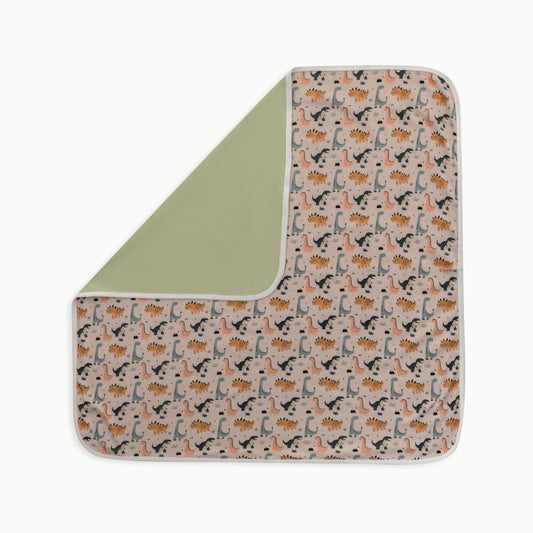
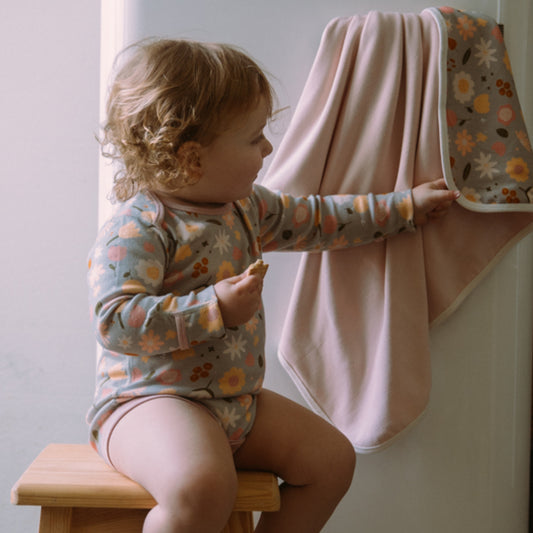
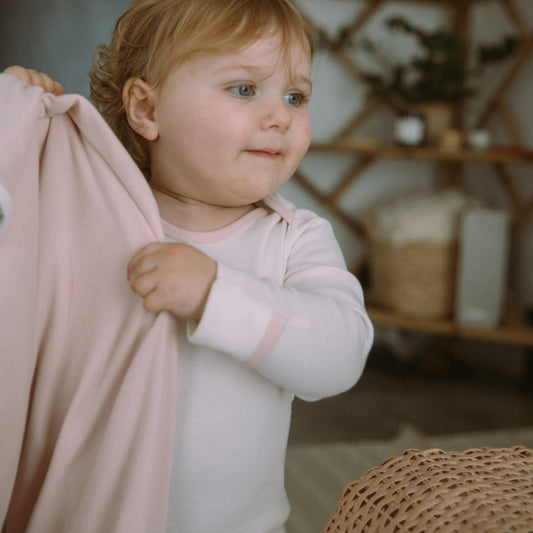
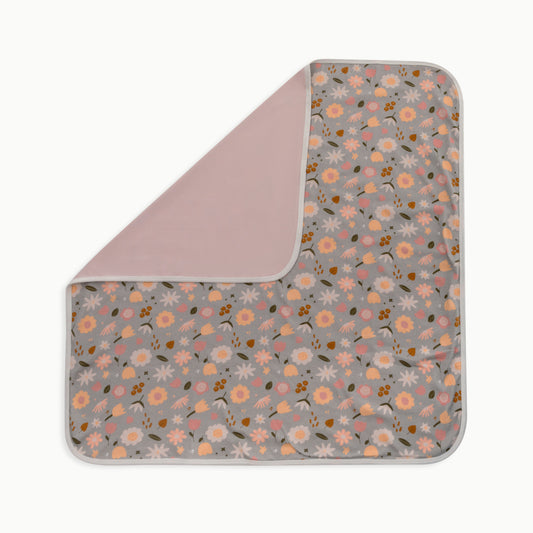
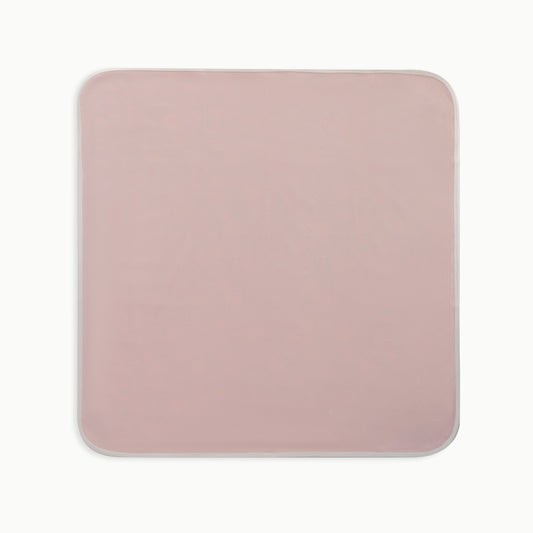
If you want something soft, breathable, and safe once your little one is ready, Treehouse’s organic cotton baby blankets are intentionally designed for comfort without bulk or synthetic insulation.
Positioning the Blanket Safely
Once your toddler is ready, keep these rules in mind:
-
Place the blanket no higher than chest level.
-
Tuck it under the mattress lightly if desired.
-
Dress your baby in breathable sleep layers underneath.
-
Avoid combining multiple blankets.
A lightweight blanket plus an organic cotton or merino base layer is usually more than enough.


