










CONTENTS
Seams are easy to overlook when buying children’s clothes. We tend to pay attention to the fabric, the fit and how cute something is, while the construction on the inside gets far less attention.
But it matters, particularly in clothing that spends most of the day directly against a child’s skin.
A flat seam lies smooth against the body, while the standard serged seam used in most children’s clothing leaves a small raised ridge on the inside. Both can be strong and durable. The important difference is how they feel against the skin.
This matters most in underwear, pajamas, bodysuits and other close-fitting clothes, where seams sit against the body for hours and move against the skin as children run, climb, sleep and play.
Here is how the main seam types differ, where those differences matter most, and what to look for when you are buying children’s clothing.
What Is a Regular Seam?
Turn most children’s T-shirts inside out and look down the side. You will probably see two pieces of fabric joined together with loops of thread wrapped around their edges.
This is usually a serged seam, also known as an overlock seam.
A serger trims the edges of the fabric, stitches them together and wraps thread around the raw edges to stop them from unraveling. It is strong, efficient and relatively inexpensive to produce, which is why you see this type of construction throughout children’s clothing.
The trade-off is the ridge it creates on the inside.
Because the fabric edges and seam allowance sit together inside the garment, you end up with a raised strip of fabric and stitching. Depending on the fabric, thread and construction, it might be quite small or surprisingly substantial.
If that seam is on a loose sweatshirt, you may never notice it. Put the same construction through the crotch of a pair of underwear, down the side of a fitted pajama top or against a baby’s skin for twelve hours, and it can become pretty annoying.
What Is a Flat Seam?
A flat seam, or flatlock seam, is constructed differently.
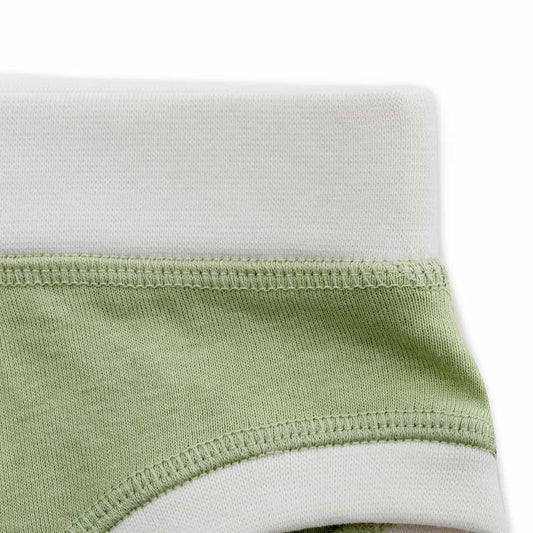
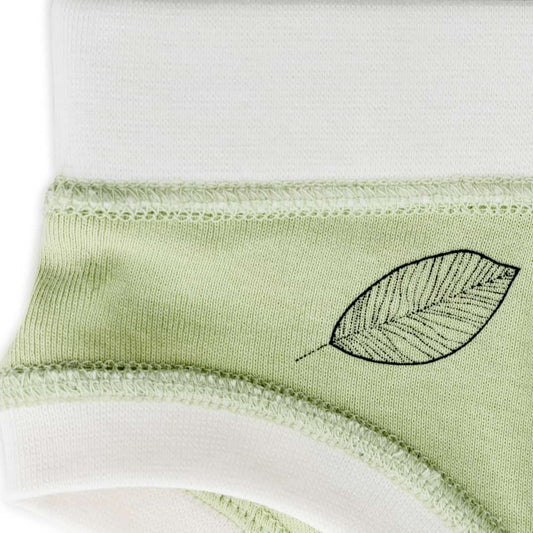
Rather than joining the fabric in a way that leaves the seam allowance standing up inside the garment, flatlock construction joins the edges to create a much flatter finish. The stitching spreads across the join, leaving little or no raised ridge on the inside.
Run your finger across a well-made flat seam and there should be very little for it to catch on.
There is a reason you see this construction in activewear. Clothes designed for running, cycling and other repetitive movement need to stretch and move without a bulky seam repeatedly rubbing the same area of skin.
The same principle is useful in children’s clothing. Children move constantly, and their underwear, pajamas and base layers can remain against their skin for many hours at a time.
You may also see coverstitching, particularly around hems. This creates the familiar parallel rows of stitching visible on the outside of many T-shirts, with looping thread underneath. It allows knit fabric to stretch while creating a relatively smooth finish.
The terminology can become technical quite quickly, but the practical question for a parent is much simpler: what does the inside of the garment feel like against the skin and what would my child prefer?
Flat Seams vs. Regular Seams
The biggest difference between flat and conventional seams is not strength. It is the amount of bulk sitting against the body.
| Flat seam (flatlock) | Regular seam (serged/overlock) | |
|---|---|---|
| How it is made | Fabric edges are joined and stitched to create a flat finish | Fabric edges are stitched and overcast together, leaving a seam allowance |
| Inside feel | Smooth and low, with little or no raised ridge | Raised ridge along the inside of the garment |
| Commonly used in | Activewear, base layers, baby clothing and sensory-conscious designs | T-shirts and most standard children’s clothing |
| Waistband | Wide, soft and covered with fabric | Narrow or exposed elastic that digs in |
| Durability | Strong, flexible and designed to accommodate movement | Strong, efficient and inexpensive to produce |
| Best suited to | Clothing worn closely against the skin or clothing for kiddos with sensitive skin or sensory sensitivities | General clothing where seam bulk is less important |
| Production | Requires more specialized construction | Fast and economical to manufacture |
There is a fairly intuitive assumption that a thicker seam must be a stronger seam. Clothing construction does not work quite that simply.
Flatlock stitching is widely used in performance clothing precisely because it needs to cope with repeated movement and stretch. A properly made flat seam can be both strong and flexible. Removing the bulky ridge from the inside of a garment does not require sacrificing durability.
This is also why I would not automatically consider “reinforced seams” a selling point.
What Does “Reinforced Seams” Mean?
 “Reinforced” sounds reassuring on a clothing label, but it does not tell you very much on its own.
Depending on the garment, it can mean an additional row of stitching, extra fabric, thicker stitching or reinforcement at a particular stress point. There are places where this is useful. Pocket openings, for example, can take considerable strain and may benefit from additional reinforcement.
More construction is less appealing when it creates additional bulk in an area sitting directly against the body.
In underwear, pajamas and base layers, I would look at where a seam has been reinforced and what that reinforcement feels like from the inside rather than assuming it is an upgrade.
A well-made flat seam is already capable of being strong and durable. Bulk is not a prerequisite for longevity.
Flat Seams vs. Seamless Clothing
 Flat-seamed and seamless clothing are often discussed as though they are the same thing. They are not.
A flat-seamed garment still has seams. The construction has been designed to make those seams lie as smoothly as possible against the body.
A seamless garment eliminates particular seams altogether. This is often achieved by knitting the garment, or part of it, as a continuous structure rather than cutting separate pieces of fabric and sewing them together. Some garments also use bonded construction in place of conventional stitching.
For most children, well-made flat seams substantially reduce the bulk associated with conventional seams.
There are children, particularly those with pronounced tactile sensitivities, who dislike the sensation of any seam. In those cases, a fully seamless garment may be preferable.
This distinction is useful when shopping for clothing described as “sensory friendly.” The term itself does not tell you how the garment has been constructed. If seam sensitivity is an issue for your child, look specifically for flatlock or seamless construction and check which one the manufacturer means.
Where Seams Sit Matters
Not every seam deserves the same amount of attention.
A seam inside a loose jacket is quite different from one running through the crotch of a pair of underwear. The amount of pressure, movement and skin contact is different.
Think about where the seams in children’s clothes tend to fall: across the shoulders, under the arms, down the sides of the body, along the legs and through the inseam and crotch.
These are also places where clothing repeatedly moves against the body.
The American Academy of Dermatology specifically advises parents of children with eczema to cover seams that irritate the skin and recommends loose, comfortable clothing. Occupational therapy guidance on sensory over-responsivity also identifies bulky seams as a potential source of clothing discomfort.
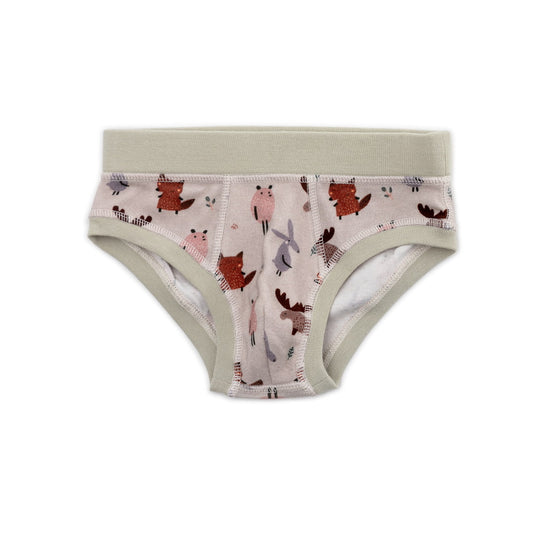
This is particularly relevant to kids' underwear. Underwear is close-fitting, worn directly against the skin for most of the day and sits in areas where there is plenty of movement, friction, heat and moisture. If I am going to be picky about seam construction anywhere in a child’s wardrobe, this is one of the first places I would do it.
The same applies to baby clothing. Bodysuits and sleepers can be worn for long stretches at a time, while babies also spend substantial amounts of time lying with their clothing pressed between their bodies and another surface. A bulky side or shoulder seam has far more opportunity to become noticeable than it would in an occasional-wear garment.
How to Tell Whether Clothing Has Flat Seams
This is difficult to judge from most product photography because brands tend to photograph the outside of their clothes, while the useful information is often on the inside.
If you have the garment in front of you, turn it inside out and run your fingers over the seams.
A standard serged seam usually has a raised, ribbed edge. You can often pinch the seam allowance between your fingers and feel the extra layers of fabric sitting above the surface of the garment.
A flat seam should sit much closer to the fabric. When you move your finger across it, there should be little or no prominent ridge.
When shopping online, look for descriptions including “flat seams,” “flatlock seams” or “flatlock construction.” If a product is described as seamless, check whether the brand means fully seamless construction or simply flatter seams.
I would also look at the rest of the inside of the garment while you are there. There is limited benefit in paying for beautifully flat seams if the manufacturer has then sewn a large, scratchy care label next to them.
What We Do at Treehouse
The inside of a garment has always mattered to me as much as the outside when developing Treehouse clothing.
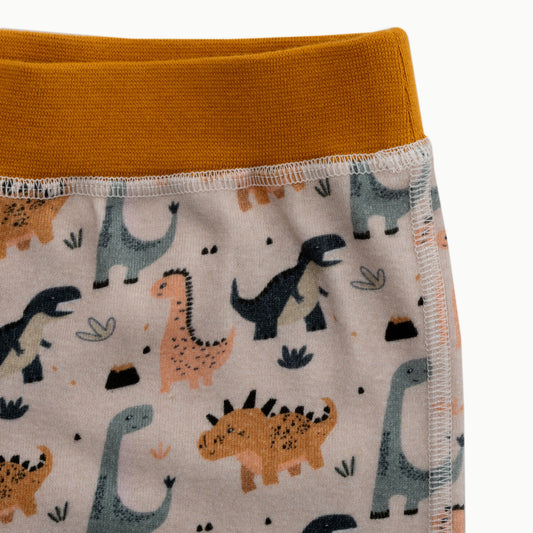
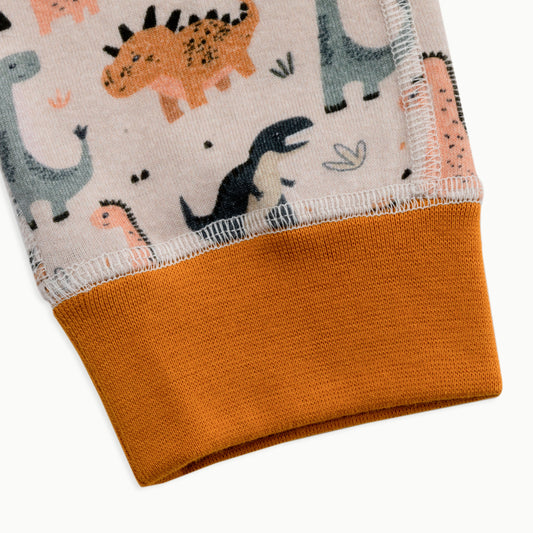
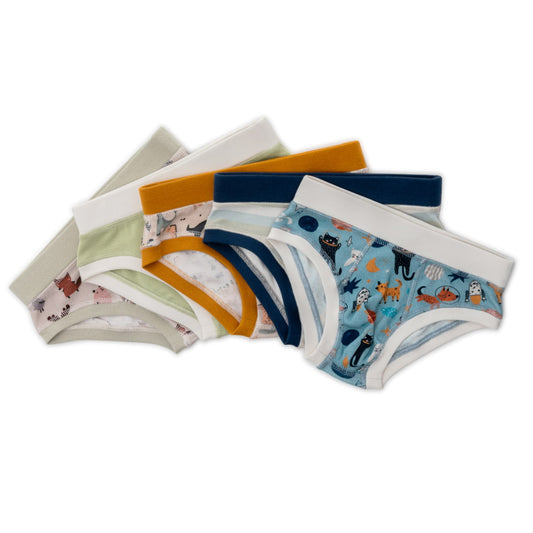
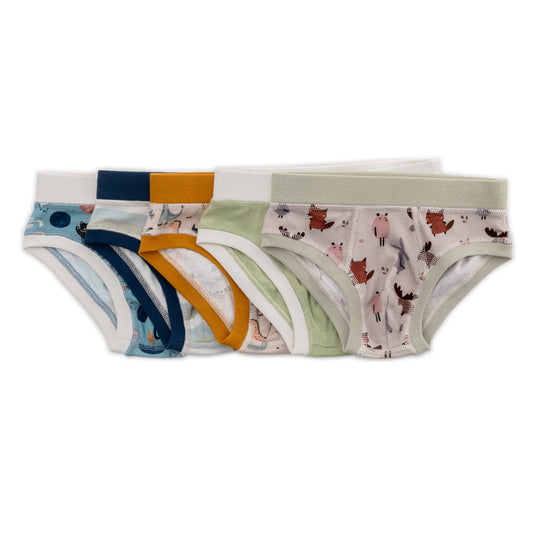
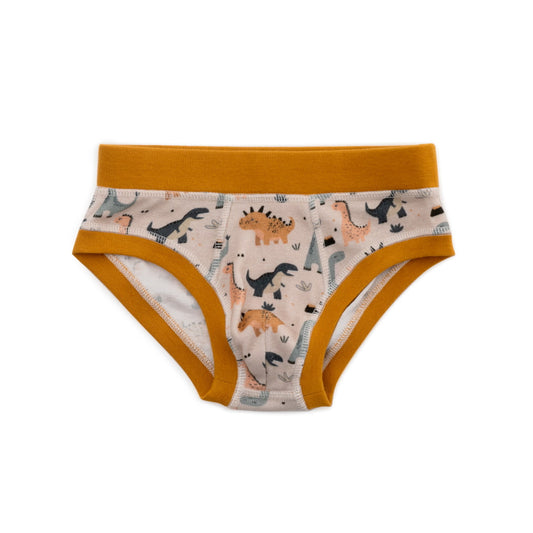
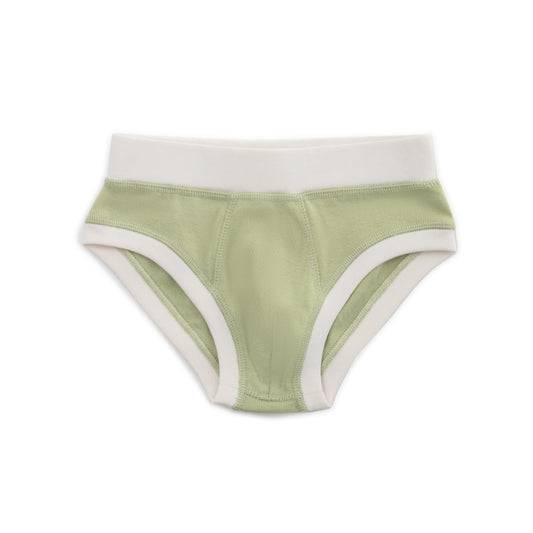
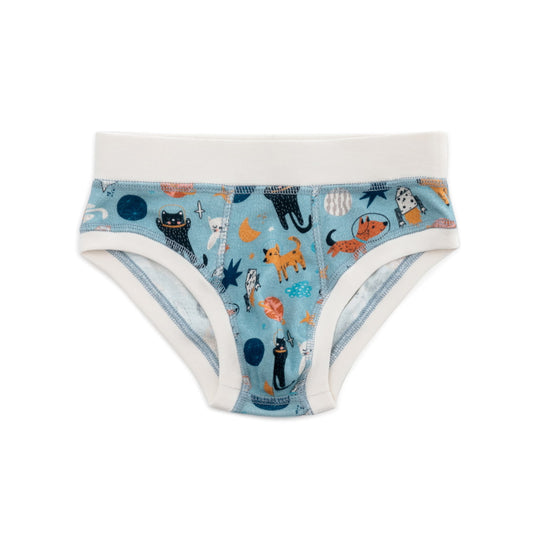
Every piece we make uses completely flat seams, including our underwear, bodysuits and sleepers. We combine them with 100% GOTS-certified organic cotton and tag-free construction because these are clothes designed to spend long periods directly against children’s skin.
Our clothing is flat-seamed rather than fully seamless. I think it is important to be precise about that distinction. Flat seams give us the smooth internal construction we want while allowing us to make durable cotton garments using cut-and-sew construction. A child who cannot tolerate the sensation of any seam may still prefer a fully seamless garment.
Flatlock construction costs more to produce than the conventional serged construction used in most clothing. It is one of the places where we decided the additional manufacturing cost was worthwhile because the difference can be felt every time the garment is worn.
You can see that construction across our organic cotton kids’ clothes, rather than only in a dedicated sensory range.


