












CONTENTS
In this post, I’m going to focus on what you should look for when buying underwear for your child, as there is a lot more to it than cotton versus polyester or briefs versus boxers.
Fabric matters, obviously, and it is where I will start. If you are going to choose only one organic or certified non-toxic item in your child’s wardrobe, I would make it underwear.
Not the coat. Not the party dress. Not the very lovely organic cotton sweatshirt for school.
Underwear.
It is worn directly against some of the most sensitive and thin skin on the body, usually for most of the waking day. It sits closely against the skin rather than hanging loosely over it, in an area where heat, moisture, sweat and friction accumulate.
That combination is worth paying attention to.
A 2026 study from Stockholm University tested 60 pieces of children’s skin-close clothing for 50 textile chemicals. Researchers detected substances including phthalates, quinolines, halogenated arylamines and nitrobenzenes, and specifically investigated whether those chemicals could migrate out of the fabric into artificial sweat. The researchers also noted that children may be particularly susceptible to textile chemical exposure because their skin is still developing. [Source: Dostberg et al., Contact Dermatitis (2026)]
Clothing is a genuine skin-contact exposure, and not all clothing gets the same amount or type of contact.
So if your budget does not stretch to replacing an entire child’s wardrobe with certified organic clothing, I wouldn’t try. I would prioritize the things that spend the longest time directly against their skin, and underwear is right at the top of my list.
But “organic” on the label is not enough to tell you whether a pair of underwear is actually well made, comfortable, or something your child will happily wear all day. Once you start looking properly, there is quite a lot to check: what the fabric is certified to, how the waistband is constructed, where the seams sit, whether there are irritating tags, how much coverage it gives, and whether the fit works for an actual moving child.
So here is what I look for when I buy children’s underwear.
| Feature | Look for | Say no to |
|---|---|---|
| Fabric | Breathable cotton, ideally certified organic | Polyester, nylon and vaguely described “blends” |
| Fiber type | Natural | Synthetic plastic fiber |
| Fit | Snug enough to stay put without leaving marks | Very tight fits or excess fabric that bunches |
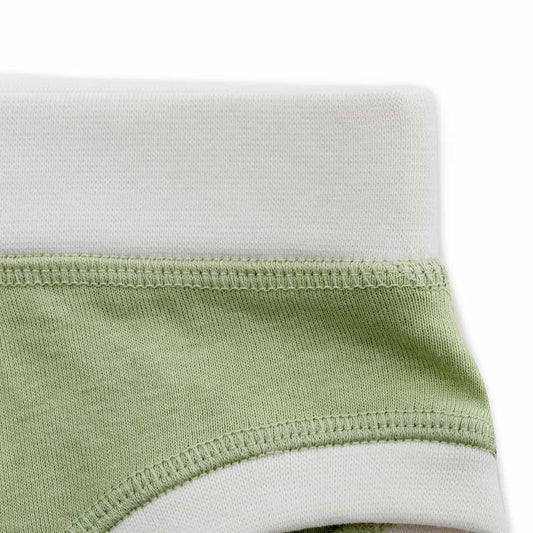
| Waistband | Wide, soft and covered with fabric | Narrow or exposed elastic that digs in |
| Seams | Flat seams that sit smoothly against the skin | Thick, raised or bulky seams |
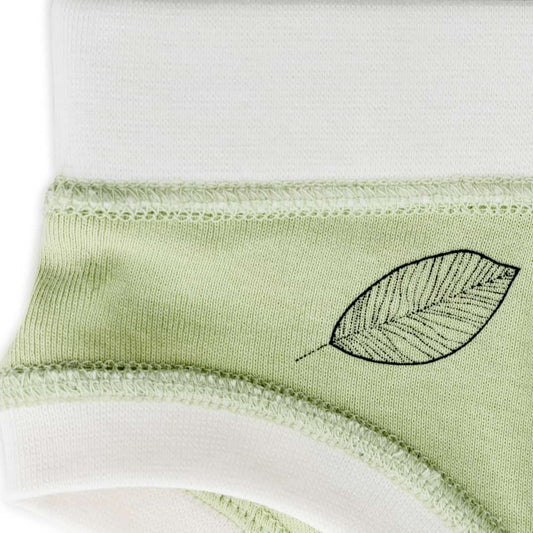
| Tags | Printed or heat-transferred labels | Stiff sewn-in tags |
| Coverage | Enough coverage to stay comfortably in place | Cuts that ride up or shift |
| Durability | Fabric and elastic that retain their shape after repeated washing | Pilling, sagging and stretched elastic |
Start With the Fabric
 For everyday children's underwear, cotton is hard to beat.
The American Academy of Dermatology recommends loose-fitting 100% cotton clothing for children with eczema and specifically advises avoiding polyester when it triggers irritation. Dermatologists also flag sweat and overheating as common eczema triggers. [Source: American Academy of Dermatology]
This matters particularly for underwear. You are putting fabric into a warm, enclosed part of the body and leaving it there for hours.
Cotton is breathable and absorbent. Polyester and nylon behave differently and can feel considerably less pleasant once a child gets hot and sweaty.
But I would go one step further than simply looking for “100% cotton.”
Cotton describes the fiber. It tells you remarkably little about everything that happened to that fiber afterward.
Textiles can encounter dyes, finishing agents and other chemical inputs during manufacturing. That is why, when I am buying something that will sit directly against my child's skin all day, I look for GOTS-certified organic cotton, rather than relying on the word “organic” alone.
The current Global Organic Textile Standard prohibits or restricts a long list of chemical inputs during certified textile processing. Version 8.0 explicitly prohibits PFAS, phthalates and other plasticizers with endocrine-disrupting potential, certain carcinogenic or allergenic dyes, and azo inputs capable of releasing specified carcinogenic aromatic amines, among other substances. [Source: Global Textile Standards]
That is a meaningful distinction. You are not simply buying cotton grown organically. You are buying into a textile-processing standard as well.
This is where I think parents can spend their money intelligently.
I would rather have seven really good pairs of certified organic underwear and keep using the perfectly serviceable conventional winter coat we already own than replace everything indiscriminately in pursuit of a “non-toxic wardrobe.”
Prioritize by contact and use.
Fit Matters More Than the Number on the Label
Children's underwear should sit close enough to the body that it stays in place, without being so tight that the waistband or leg openings leave marks.
Too tight and you get digging, rubbing and chafing. Too loose and the fabric moves around, bunches under clothing and spends half the day somewhere it was not originally intended to be.
The American Academy of Dermatology specifically advises avoiding tight clothing for children with eczema and notes that seams and tags can trigger flares where they contact the skin. [Source: American Academy of Dermatology, guidance on eczema-friendly clothing and childhood eczema triggers.]
Again, underwear magnifies these little construction decisions. A bulky seam inside a coat is separated from the body by several layers of clothing. A bulky seam inside a pair of briefs is rubbing directly against the skin every time your child runs, sits, climbs or moves.
If your child falls between sizes, I generally prefer sizing up. A little extra room is usually much less noticeable than underwear that is slightly too tight.
It is also worth checking the underwear drawer periodically rather than assuming that because a pair technically still goes on, it still fits. Children have an irritating habit of growing while we are busy doing other things.
👉 For more information, read our guide on kids’ underwear sizes.
Look at the Waistband
The waistband is one of the most important parts of children's underwear and one of the easiest to overlook online.
With exposed elastic, the elastic itself sits directly against the skin. A covered or fabric-encased waistband puts the elastic inside soft fabric instead. There are also bonded waistbands, where layers are fused rather than traditionally stitched.
For everyday children's underwear, I like a wide, fabric-covered waistband. It spreads pressure across a larger area and means bare elastic is not sitting against the child's skin all day.
This is also why I don't think “organic cotton” on the front of the packet is enough.
You can use beautiful certified cotton and then put a scratchy exposed waistband, enormous tags and bulky seams inside it. Children are unlikely to be impressed by your fiber credentials while pulling their underwear out of their bottom for the fifteenth time that day.
Check the Seams
 Standard underwear is often constructed with serged or overlocked seams, which leave a raised ridge inside the garment.
Flatlock construction allows the seam to sit much flatter against the body.
For many children, either will be perfectly comfortable. For children prone to irritation or particularly sensitive to texture, the difference can be considerable. The American Academy of Dermatology specifically identifies seams as a potential source of irritation and recommends covering irritating seams for children with eczema. [Source: American Academy of Dermatology]
I am also suspicious of the phrase “reinforced seams.” It sounds reassuringly robust, but reinforcement can mean more stitching and more bulk. Yes we want children's underwear to survive the washing machine. But it’s possible to achieve durability while keeping comfort front of mind.
Look at photographs of the inside of underwear before buying it. They often tell you far more than the front of the packet.
Tags Are Entirely Unnecessary
I have fairly strong feelings about tags in children's underwear, mainly because we solved this problem some time ago.
Size and care information can be printed or transferred directly onto fabric. There is very little reason to sew a stiff label into something designed to sit against a child's skin for ten or twelve hours.
The American Academy of Dermatology recommends buying tag-free clothing or removing tags for children with eczema. [Source: American Academy of Dermatology]
This is a tiny manufacturing decision with an outsized effect on comfort, particularly for children who are sensitive to clothing textures.
Coverage and Style
There is no universally superior underwear cut.
Briefs, hipsters, boy shorts and boxer briefs all sit differently, and children tend to develop surprisingly firm opinions on the subject.
What matters is that underwear provides enough coverage to stay where it was put.
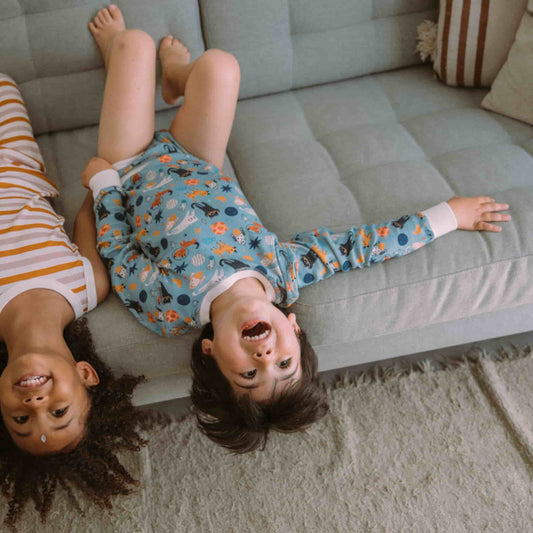
A child should be able to run, climb, sit cross-legged and spend an inexplicable amount of time upside down without constantly rearranging it.
Look at coverage through the seat, the shape of the leg openings and, with boxer briefs, whether the legs remain in place rather than rolling upward.
👉 For more information, read our guide on kids’ underwear styles.
Durability Matters
Underwear gets washed constantly, which makes it a very efficient test of whether something was actually well made.
Poor-quality fabric can thin, pill and lose its shape. Elastic stretches. Waistbands twist. Leg openings sag.
This is also one reason I don't think buying better underwear necessarily means treating it as something precious.
Quite the opposite. Good underwear should withstand the physical craziness of childhood.
I look for cotton with enough weight and substance to survive repeated washing, elastic that recovers properly and construction that does not start unraveling after a month.
For younger children, I also look at whether they can pull it up and down themselves. Independence is considerably easier when the waistband stretches properly and there are no complicated fastenings to negotiate while somebody desperately needs the toilet.
If You Only Change One Thing
I spend a lot of time talking about safer children's clothing, and I don't think the answer is throwing away everything you own.
That is expensive, wasteful and unnecessary.
If you want to make changes gradually, think about proximity to skin and hours of wear.
A polyester Halloween costume worn over other clothes for two hours once a year would sit very low on my priority list.
Underwear worn directly against the body for perhaps 10 or 12 hours, washed, reworn and repeated hundreds of times a year sits at the other end.
Pajamas, base layers and other frequently worn skin-contact clothing would come next.
This is the way I approach a lower-tox wardrobe in my own family and the way I think about it when designing Treehouse. You do not need perfection. Put your money where it buys the most meaningful upgrade.
What We Do Differently at Treehouse
Underwear was exactly the category where I felt all these small details were worth obsessing over.
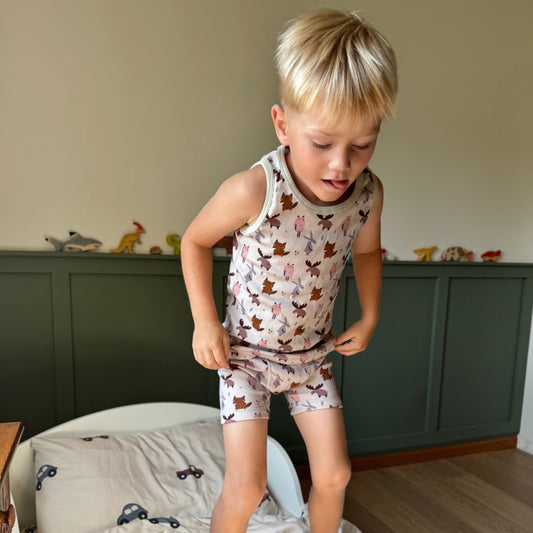
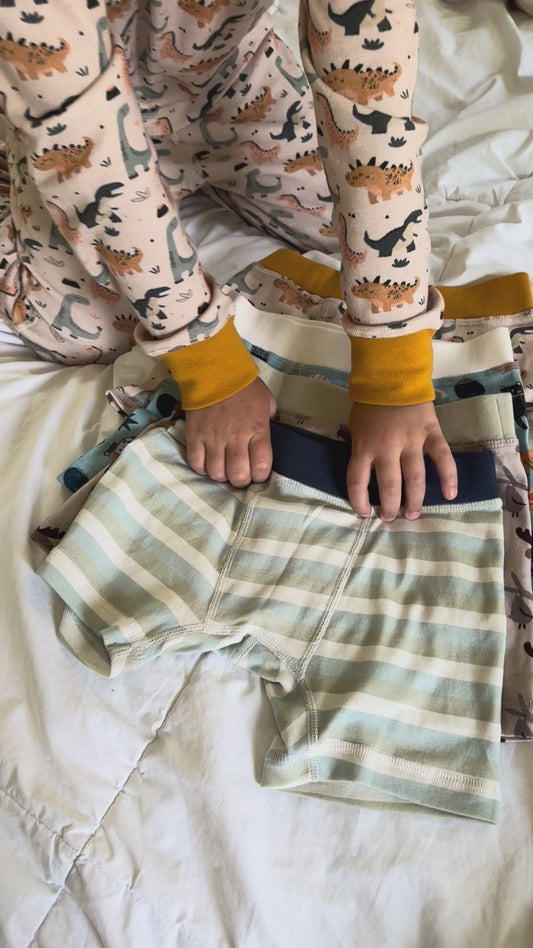
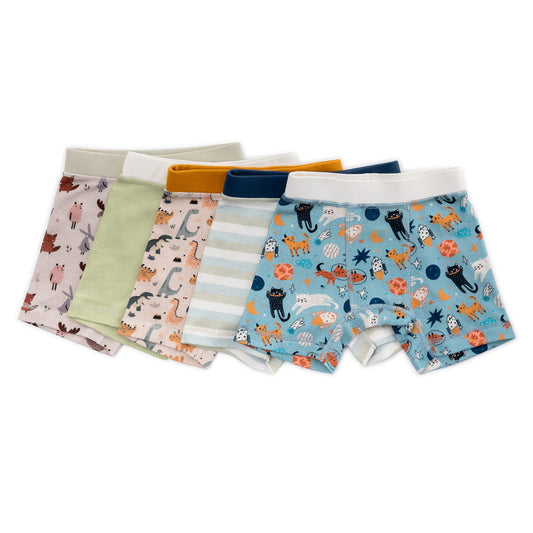
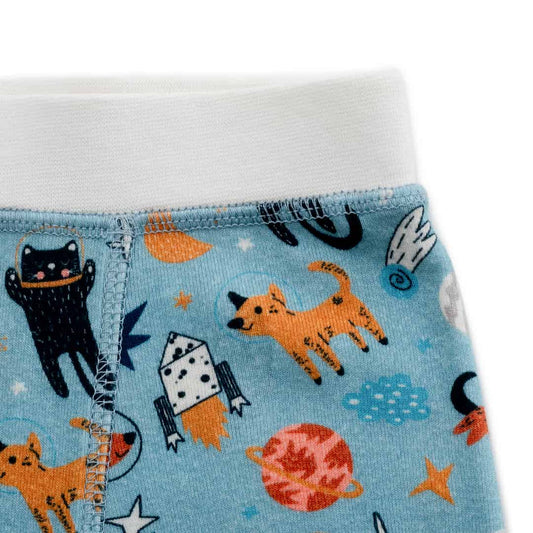
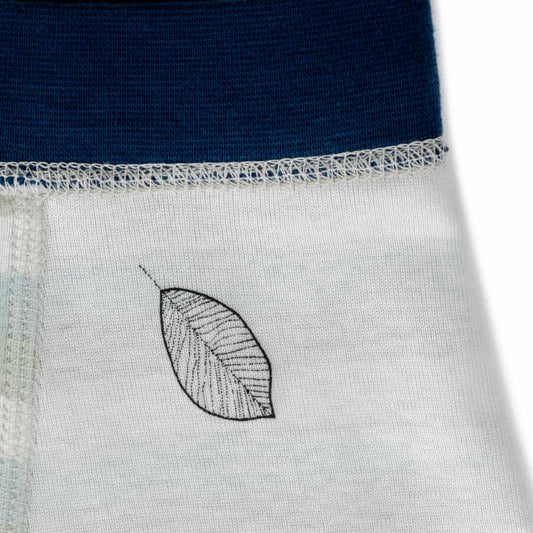
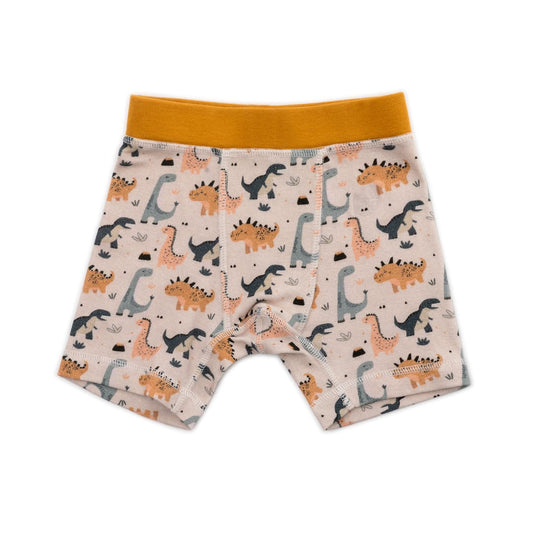
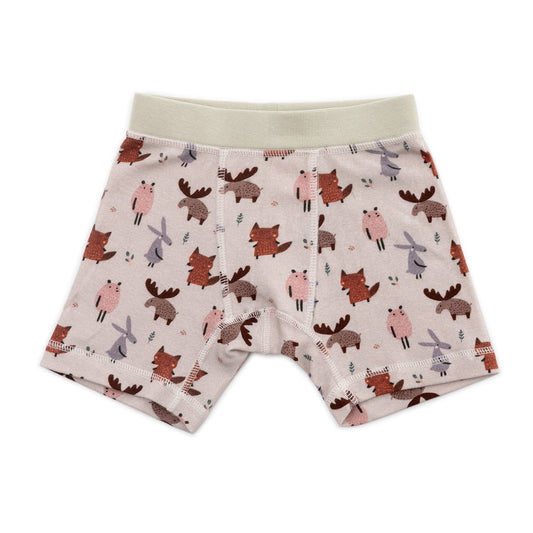
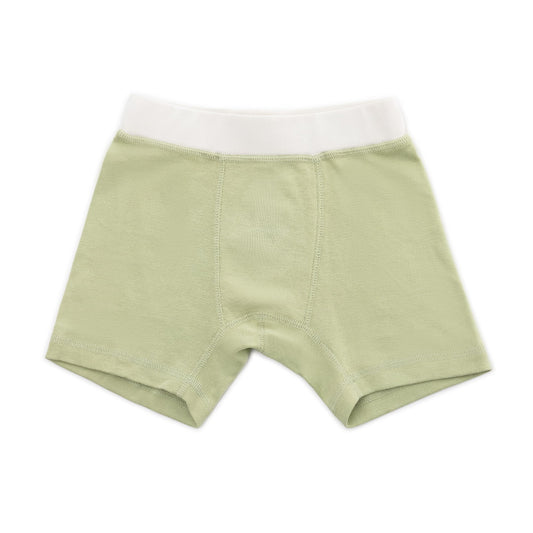
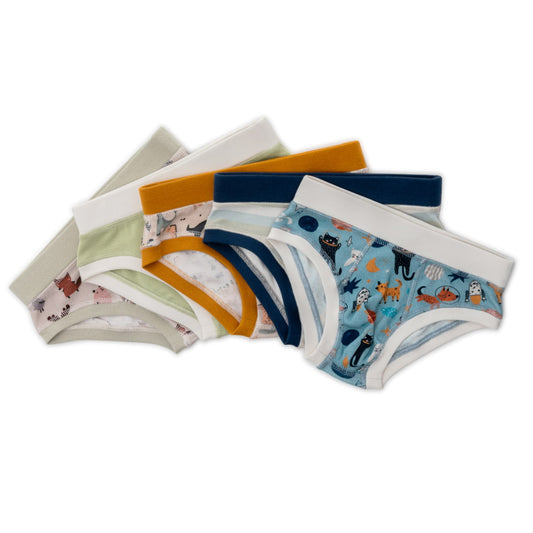
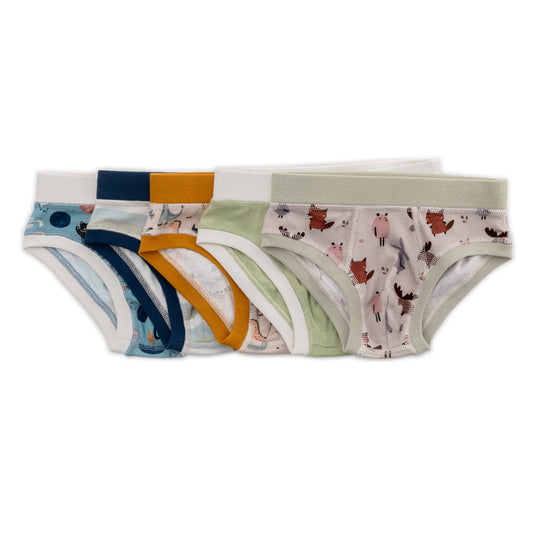
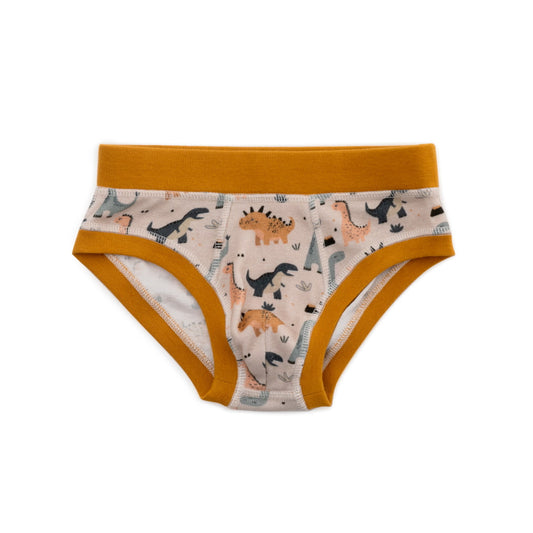
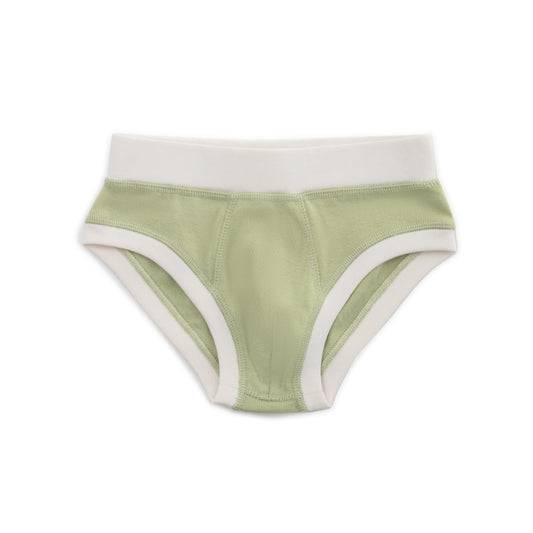
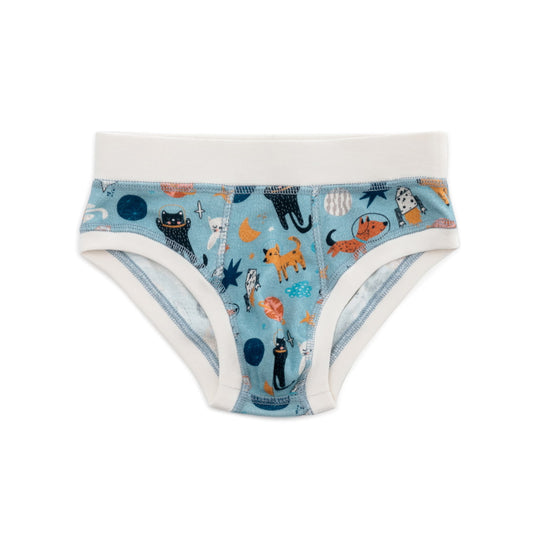
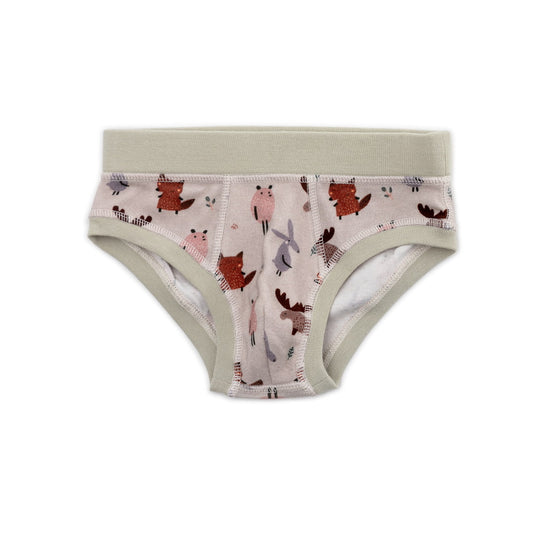
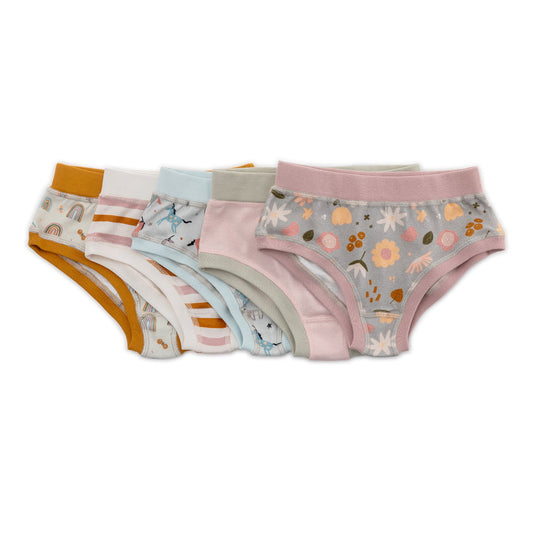
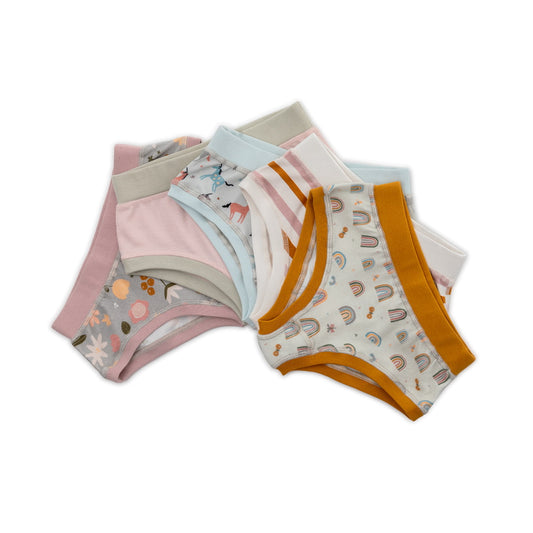
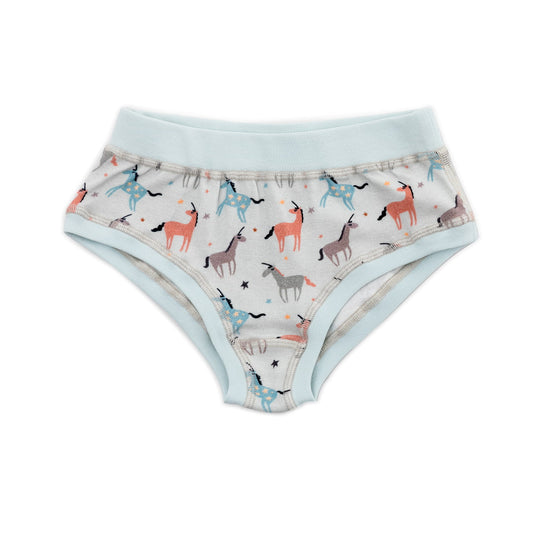
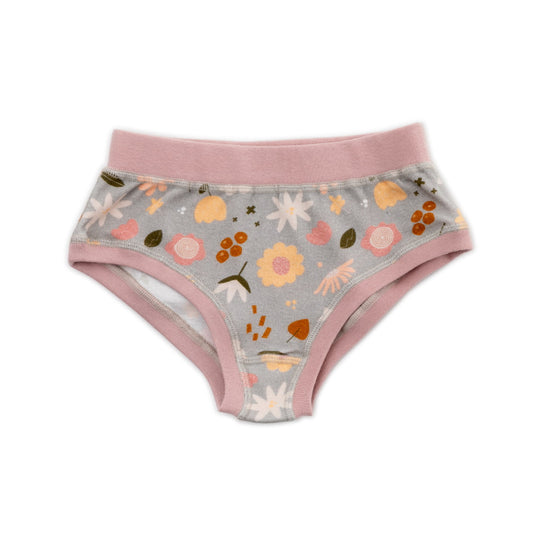
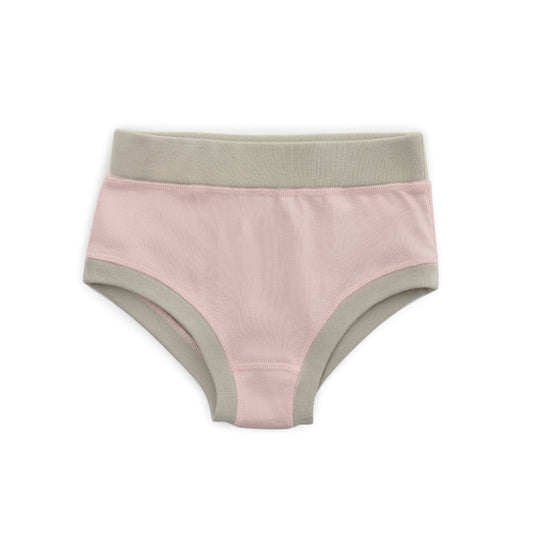
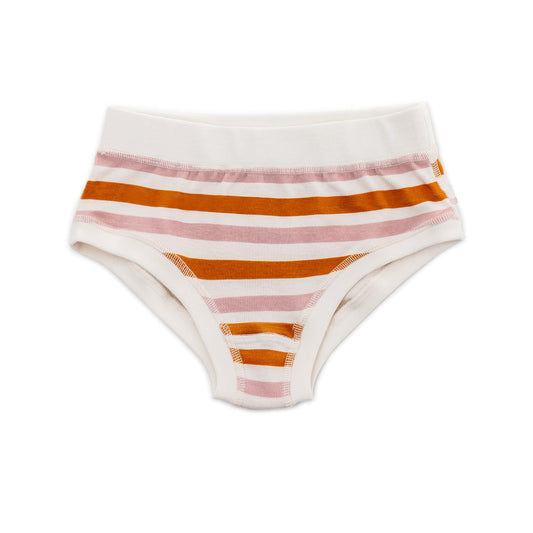
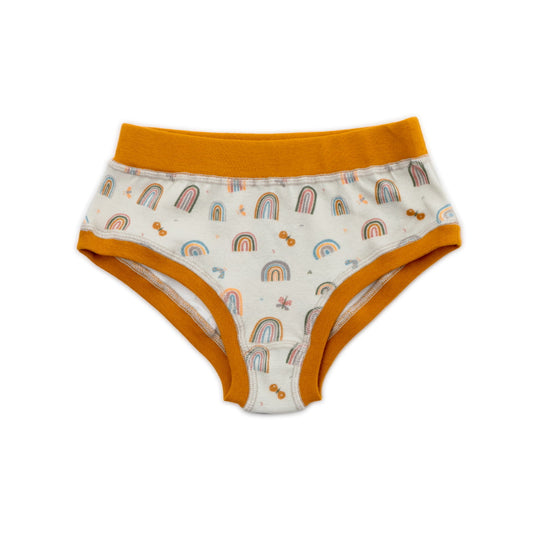
Treehouse underwear is made from 100% GOTS-certified organic cotton, rather than a cotton blend. We use a heavier-weight ribbed cotton, a wide waistband completely covered in soft fabric, genuinely flat seams throughout and printed labels instead of sewn-in tags.
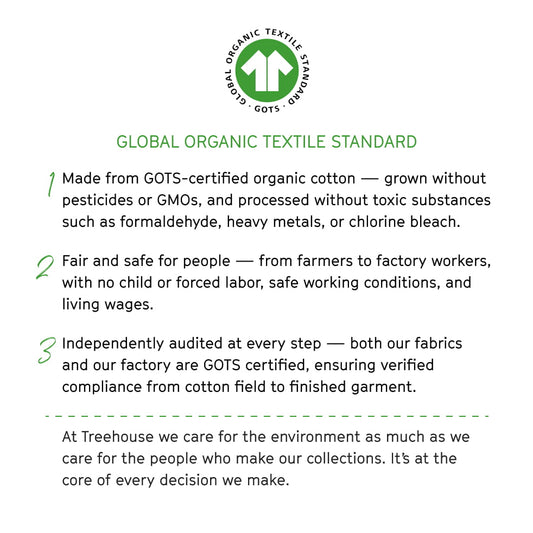
The GOTS certification matters to me just as much as the cotton itself. The standard controls chemical inputs throughout certified textile processing and prohibits categories including PFAS and phthalates, as well as specified hazardous dyes and other substances.
Then we dealt with the less glamorous bits: enough coverage, elastic that actually recovers, seams that do not create ridges against the skin and cuts children can pull on themselves.


