

















CONTENTS
When I first started researching the textile industry, I assumed most chemicals ended up in clothing by accident, maybe. I pictured traces left behind during farming or manufacturing that nobody had quite managed to remove.
Many of the chemicals found in clothing are there because someone deliberately chose to put them there. And when I say deliberately, I mean by design. These chemicals help fabrics resist wrinkles, repel water, shrug off stains, stay brilliantly white, or hold onto vibrant colors wash after wash. Others are introduced much earlier, while cotton is being grown or processed into fabric. And this is what annoys me the most about the whole thing.
Over the last few years, I've written about PFAS, formaldehyde, azo dyes, heavy metals, phthalates, flame retardants, and optical brighteners individually. Every one of them deserves attention and I could write chapters on them. Together, though, they can feel overwhelming. Parents shouldn't need a degree just to figure out baby clothes.
After spending the last few years of my life visiting factories, dye houses, and mills, speaking with certification bodies, and building Treehouse around safer manufacturing, I've realized something.
Almost every chemical you'll hear me talk about falls into one of three groups.
The first are chemicals intentionally added to give clothing extra features, like wrinkle resistance or stain repellency.
The second are hidden in the dyes, pigments, and prints that give clothing its color.
The third are residues left behind by the way conventional cotton is grown and processed.
Why do Baby Clothes Contain Chemicals?
 The word chemical isn't automatically a bad thing. Water is a chemical. Cotton is made of chemicals. The question isn't whether chemicals exist. It's which ones have been added, why they're there, and whether they're necessary in the first place.
Modern clothing passes through dozens of manufacturing steps before it reaches a store shelf. Cotton is cleaned, spun, knitted or woven, bleached, dyed, softened, washed, finished, and packaged. At almost every stage, manufacturers have the option to add treatments that change how the finished garment performs.
Some fabrics are treated to resist wrinkles because consumers expect clothes to come out of the dryer looking perfectly pressed. Others are coated to repel water or stains. White fabrics may be treated with optical brighteners to make them appear even brighter under store lighting. Printed clothing often relies on an entirely different set of chemicals.
Not every brand uses these treatments, but many do because they improve appearance, reduce returns, and make products easier to market.
Babies also interact with clothing differently than adults. Their skin is thinner, their skin barrier is still developing, and they're in contact with fabric for most of the day. They sleep in it, crawl in it, sweat in it, and chew on sleeves, collars, and blankets. That doesn't mean every item of clothing is unsafe. It simply means the choices made during manufacturing matter more than most parents realize.
The chemicals brands choose to add
Some of the easiest chemicals to avoid are also the easiest to spot.
Brands rarely tell you which treatments they've applied, but they do advertise the benefits.
Wrinkle-free.
Permanent press.
Water-repellent.
Stain-resistant.
Easy care.
Those phrases tell you far more about how a garment was made than most parents realize.
PFAS: The Chemicals Behind Stain-Resistant Clothing
If you've ever wondered why a child's jacket shrugs off mud or why a bib seems impossible to stain, there's a good chance PFAS are involved.
PFAS are a family of thousands of synthetic chemicals often referred to as "forever chemicals" because many don't readily break down in the environment. They've been used for decades to make products resist water, oil, and stains.
The challenge for parents is that you'll almost never see the words contains PFAS on a clothing label.
Instead, you'll see marketing claims like water-repellent, stain-resistant, or easy-care.
That's beginning to change. California and New York have both introduced restrictions on intentionally added PFAS in apparel, and OEKO-TEX Standard 100 now prohibits intentionally added PFAS altogether. Those changes are pushing the industry in the right direction, but they're still relatively new, and many garments already in circulation were manufactured before the rules took effect. Research has also identified PFAS in products including school uniforms and children's outdoor clothing.
Full details in the PFAS spoke: PFAS in Kids' Clothing.
When we developed Treehouse, avoiding this category was straightforward.
If a garment doesn't need to repel water or stains, we don't try to make it.
Kids don't need chemical finishes on underwear, pajamas, onesies, or everyday basics.
Formaldehyde: Why Some Clothes Barely Wrinkle
One of the biggest surprises for many parents is discovering that formaldehyde has historically been used in clothing for preventing wrinkles.
Wrinkle-free, non-iron, and permanent-press finishes often rely on formaldehyde-based resins that help cotton hold its shape after washing.
That doesn't mean every wrinkle-free shirt contains high levels of formaldehyde. Modern manufacturing has reduced residual amounts considerably, and studies show that washing new clothing removes much of the surface residue. For clothing, the main concern isn't the cancer classification people often see in headlines, which is based primarily on occupational inhalation exposure. The evidence surrounding finished garments points much more strongly toward skin irritation and allergic contact dermatitis in susceptible individuals.
Cotton wrinkles naturally. If it doesn't, there's usually a finish or treatment changing the way the fibers behave. That doesn't automatically make it unsafe, but it's worth understanding what created that convenience in the first place.
Hand off: Is formaldehyde in baby clothes really dangerous?
Flame Retardants: Less Common than Many Parents Think
Children’s pajamas sold in the United States have to meet federal flammability rules, but brands can comply in more than one way.
Sleepwear above size nine months must either fit within strict snug-fitting measurements or pass flame-resistance testing. Snug-fitting cotton pajamas can meet the rules without a flame-retardant treatment because the close fit reduces the amount of fabric exposed to a flame. Looser pajamas must be made from fabric that passes the required testing, which may be achieved through the fiber itself, the construction of the fabric, or a chemical treatment.
This distinction matters because labels such as flame resistant and not chemically treated do not mean the same thing. Polyester is often described as inherently flame resistant because it tends to melt and shrink away from a flame rather than ignite like untreated cotton.
The regulations do not ban manufacturers from using flame-retardant chemistry, however, and a parent usually cannot determine the full manufacturing method from the fiber label alone. Look for snug-fitting cotton pajamas labeled “wear snug-fitting, not flame resistant,” ask the brand directly whether any flame-retardant treatment was applied, and choose certified natural-fiber sleepwear when you want clearer controls over the chemicals used during production.
Full details in the Flame Retardants spoke: Flame Retardants in Baby Pajamas.
The Chemicals Hidden in Dyes, Prints, and Trims
 The next category is the one I find most frustrating because parents have almost no way of spotting it themselves.
If a jacket is advertised as stain resistant, at least you've been given a clue that something has been added to the fabric. Dyes don't work like that. Two baby bodysuits can look identical on the shelf, but the chemistry used to create those colors may be completely different. You can't tell by looking, touching the fabric, or even reading the label.
That's why I put so much emphasis on certifications. They're one of the few ways parents can understand how a garment was made without following it through every stage of production.
Azo Dyes
Here’s everything to know about AZO dyes.
Azo dyes are simply a family of synthetic dyes, and they're the most widely used dyes in the textile industry because they're stable, inexpensive, and capable of producing almost every color you can imagine. The problem isn't azo dyes as a whole. It's a small group that can break down into compounds known as aromatic amines, some of which have been linked to cancer.
That's why the European Union restricts azo dyes that can release these compounds under REACH legislation. The United States has never introduced an equivalent federal restriction for textiles, which means a garment can legally be sold here while containing dyes that wouldn't meet European requirements.
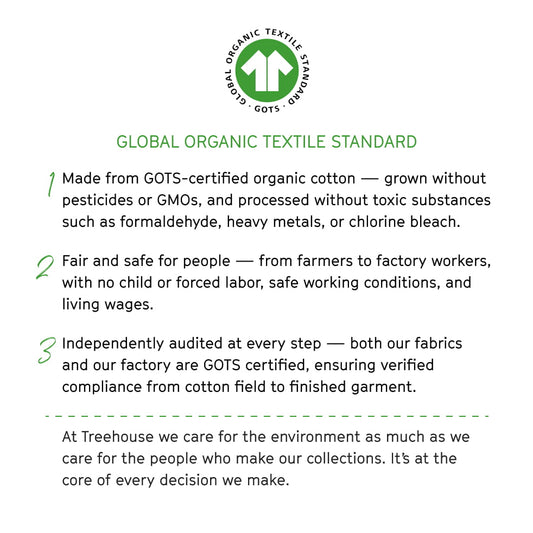
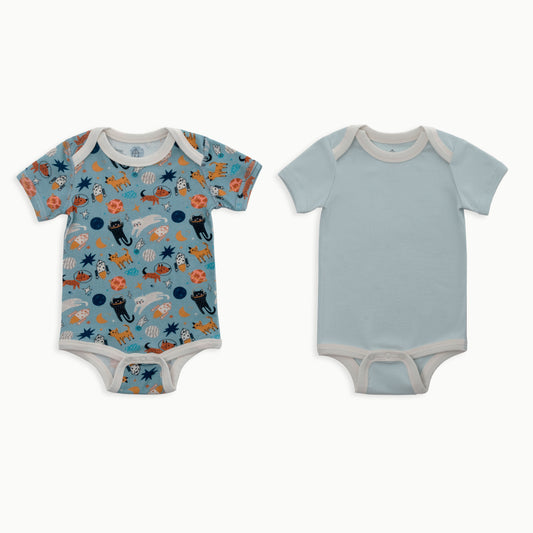
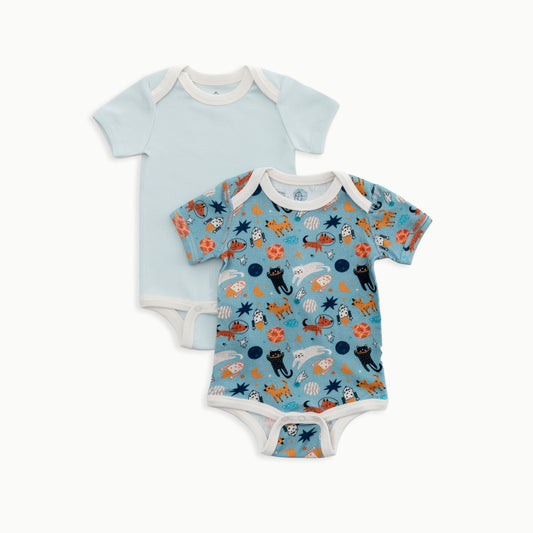
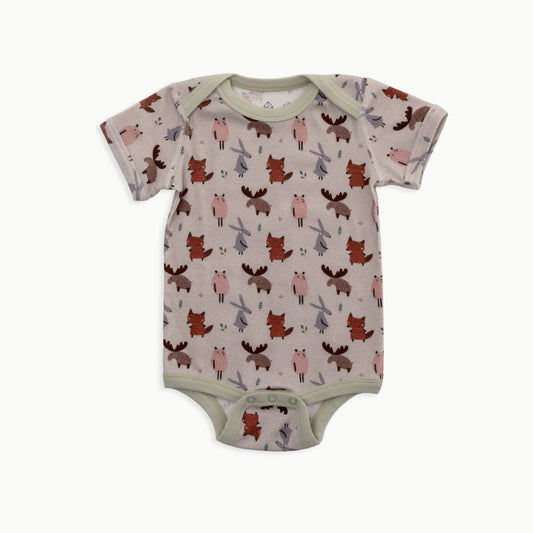
When we developed Treehouse, this wasn't a compromise I wanted to make. We chose GOTS-approved, water-based dyes because GOTS prohibits azo dyes that can release carcinogenic aromatic amines. Parents shouldn't have to wonder what was used to color the clothes their children wear every day.
Heavy Metals
Heavy metals are another topic that's often misunderstood because most people associate them with contaminated drinking water or old lead paint rather than clothing.
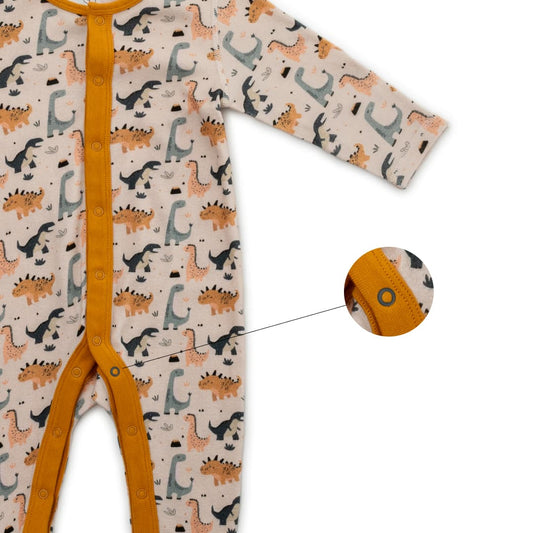
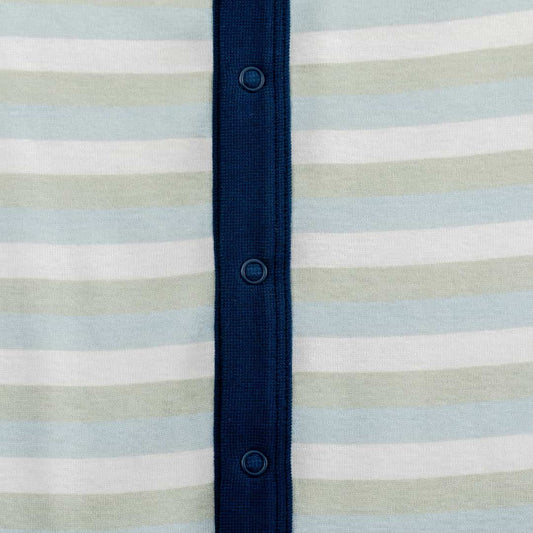
In textiles, heavy metals can be introduced through certain dyes, pigments, and even metal trims like snaps or buttons. Lead tends to dominate the conversation because children's products sold in the United States are subject to strict legal limits, but it's not the only metal worth paying attention to.
Nickel is actually the metal I think about most often when I'm looking at children's clothing because it's the most common cause of allergic contact dermatitis worldwide. If you've ever seen a child develop redness or irritation exactly where a metal snap sits against their skin, nickel is one possible explanation.
A study published in 2025 analyzed infant clothing from several countries and found that 80% of the garments exceeded OEKO-TEX Class I limits for at least one heavy metal, including arsenic, cadmium, or chromium. The highest concentrations were generally found in darker synthetic colors.
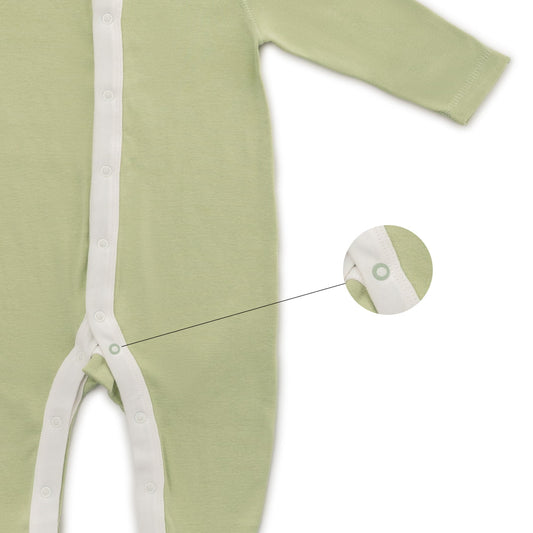
Findings like these are why I don't think "it's sold in America" is a particularly meaningful safety standard. Products have to meet the law, but the law doesn't test for everything parents assume it does. That's also why we specify nickel-free snaps at Treehouse and rely on certifications that test finished garments for heavy metals rather than simply assuming everything is fine.
Phthalates
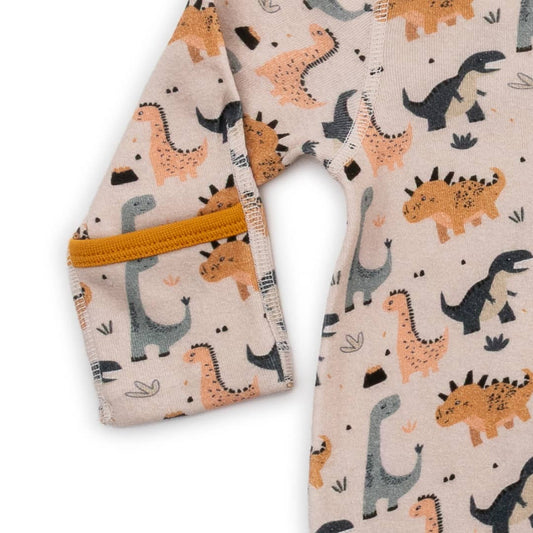
Think about the children's T-shirts you've seen with giant superhero graphics, glittery slogans, or thick cartoon characters printed across the front. If the design feels rubbery, plastic-like, or raised above the fabric, there's a good chance you're feeling plastisol ink rather than the cotton itself.
Traditional plastisol printing uses PVC mixed with plasticizers, historically including phthalates. Phthalates are endocrine-disrupting chemicals, and while clothing is only one possible source of exposure, it's one that parents can choose to avoid if they know what they're looking for.
That doesn't mean every printed shirt contains phthalates. Many manufacturers have moved to safer alternatives, particularly for children's products, but not every factory follows the same standards.
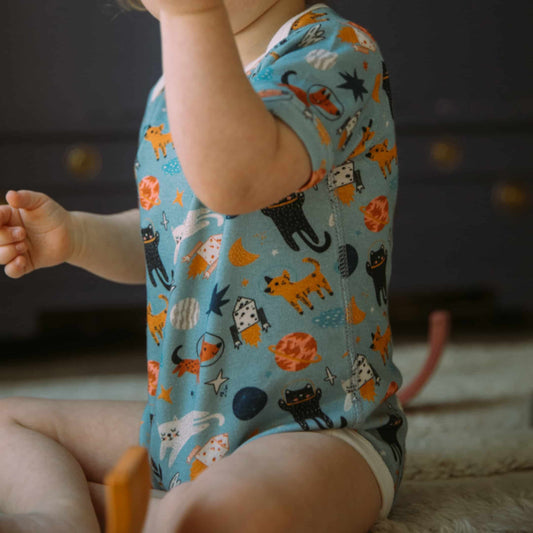
When we were developing our own collection, we chose water-based printing because the ink becomes part of the fabric instead of sitting on top as a thick plastic layer. It creates a softer print, and GOTS prohibits PVC and phthalates in textile inks.
The Chemicals Left Behind During Production
Not every chemical ends up in clothing because a brand wanted a particular feature. Some are simply part of how conventional textiles are manufactured.
NPEs
Nonylphenol ethoxylates, usually shortened to NPEs, are used throughout textile manufacturing to help fabrics wash, scour, and dye evenly.
Unlike PFAS or formaldehyde, this isn't the chemical I spend the most time worrying about from a child's skin-contact perspective. The bigger issue is what happens after those residues leave your washing machine.
As NPEs break down, they form nonylphenol, a persistent endocrine-disrupting chemical that's toxic to aquatic life. Researchers have shown that residues remaining in clothing are released during the first few washes, eventually making their way into rivers and oceans.
The European Union restricted NPEs in textiles in 2021.
The United States still doesn't have an equivalent federal restriction.
GOTS prohibits them altogether.
This is one of those examples where choosing certified clothing isn't only about your own family. It's also about reducing the environmental impact that follows clothing long after it's left the factory.
Optical brighteners
Bright white baby clothes have become so normal that most of us don't question if they’re naturally that white. Of course, Cotton isn't naturally fluorescent.
That crisp, almost glowing white often comes from fluorescent whitening agents, more commonly called optical brighteners. They absorb ultraviolet light and reflect blue light back to your eyes, making fabric appear brighter than it really is.
They don't make cotton cleaner, stronger, softer, or better quality. They're used because consumers associate bright white fabric with freshness.
For children with very sensitive skin, optical brighteners have also been associated with irritation and allergic reactions, although many people will never notice them.
Personally, I'd rather buy natural cotton that looks like natural cotton than fabric that's been chemically brightened to look whiter under store lighting.
How to Avoid Chemicals in Baby Clothes
I rely on a couple of simple principles that eliminate most of the guesswork.
The first is to be cautious of performance claims. Wrinkle-free, permanent press, stain resistant, water repellent, easy care, and brilliant white all describe something that has been done to the fabric. Sometimes those treatments are harmless, sometimes they're not, but they're always worth understanding.
The second is to look for certifications with standards that are independently verified. GOTS controls what can be used throughout the manufacturing process, while OEKO-TEX Standard 100 tests the finished garment itself for hundreds of harmful substances. If you're buying clothing for a baby, look for OEKO-TEX Class I, which has the strictest requirements.
Parents often ask whether washing new clothes removes these chemicals. Washing is always a good idea because it removes much of the surface formaldehyde left over from manufacturing and helps rinse away some processing residues. What it won't do is remove PFAS finishes, heavy metals bound within dyes, or restricted azo dyes if they were used in the first place. Washing helps, but it doesn't undo manufacturing decisions.
Why I Built Treehouse This Way
Treehouse exists because I didn't like the answers I was finding while researching children's clothing.
I wanted to know where the cotton came from. I wanted to know what was being used in the dye house. I wanted certifications that I could verify myself instead of marketing claims that depended entirely on trust.
That's why our cotton is GOTS certified. It's why our linen is OEKO-TEX Standard 100 certified. It's why we use GOTS-approved water-based dyes, nickel-free snaps, and avoid PVC-based plastisol prints.
Parents already spend enough time comparing sizes, reading reviews, and figuring out what their children have outgrown this month. They shouldn't also have to become textile chemists.


