






CONTENTS
Fall is probably the most frustrating season for dressing a baby. You leave the house on a chilly morning, spend half an hour wondering whether you've dressed them warmly enough, and by lunchtime you're removing layers because the temperature has climbed 15 degrees. The simplest way to dress a baby for fall is to use adjustable layers: a soft, breathable base layer, a warmer middle layer and something you can easily remove when the temperature rises. The American Academy of Pediatrics (AAP) recommends dressing babies in no more than one additional layer than an adult would wear in the same conditions. The important part is knowing when to take that extra layer off.
Why Fall Is Trickier Than Winter or Summer
In winter, you generally know what you're dealing with. It's cold, you dress accordingly, and you spend the next few months trying to find the missing mitten. Summer has its own challenges, but at least the objective is reasonably consistent: keeping your baby cool.
Fall is rather less simple.
Depending on where you live, a typical October day might start at 45°F, reach 65°F by midafternoon and drop back into the 40s by bedtime. Add a heated apartment, a stroller walk, a car journey and a trip to the grocery store, and your baby could experience four or five very different environments without ever having a wardrobe change.
Babies are also less efficient at regulating their body temperature than adults, particularly newborns and premature infants. Their relatively large surface area compared with their body mass means they can lose heat more quickly, while their limited ability to communicate discomfort makes it harder for parents to judge whether they're comfortable.
This is why dressing a baby for fall should be less about choosing the perfect outfit and more about having a system that allows you to respond to changing conditions.
A handful of well-chosen, breathable pieces will generally serve you better than lots of thick seasonal outfits that are only comfortable at one particular temperature.
The Simple Fall Layering System
 The most practical approach is to think in terms of three layers, each serving a different purpose, rather than dressing your baby in one thick outfit.
| Layer | What to wear | When to use it |
|---|---|---|
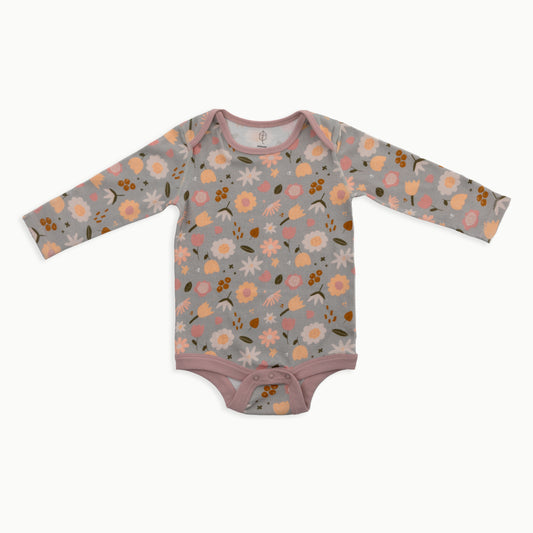
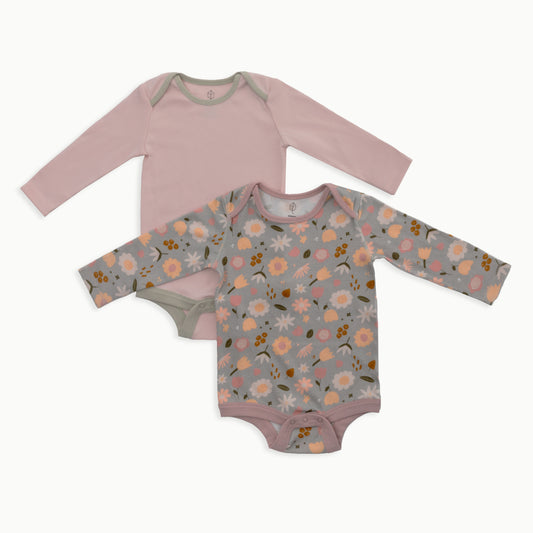
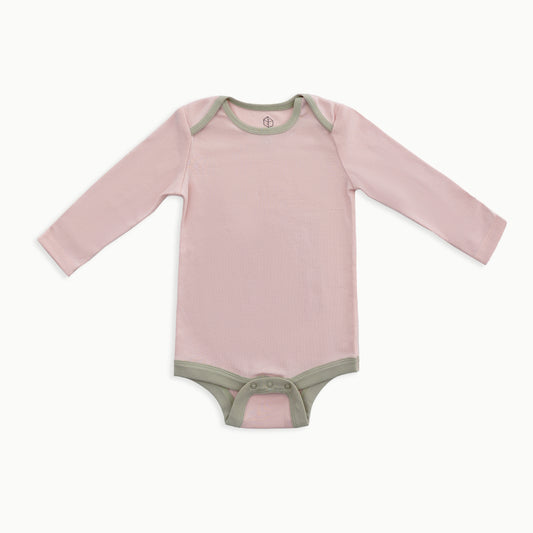
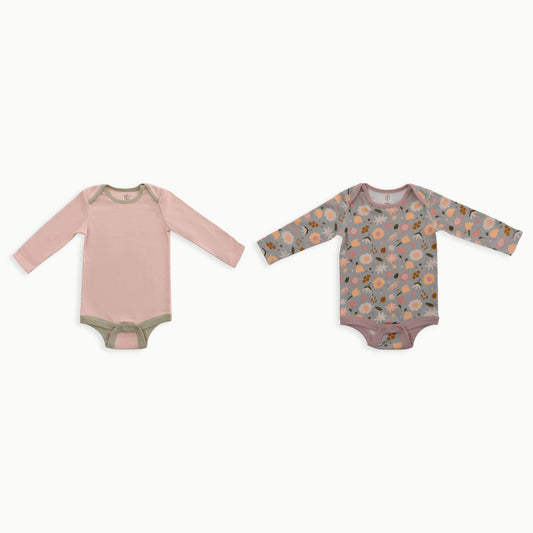
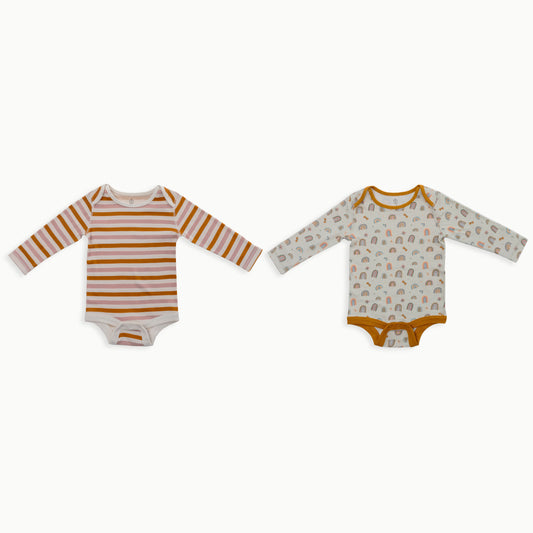
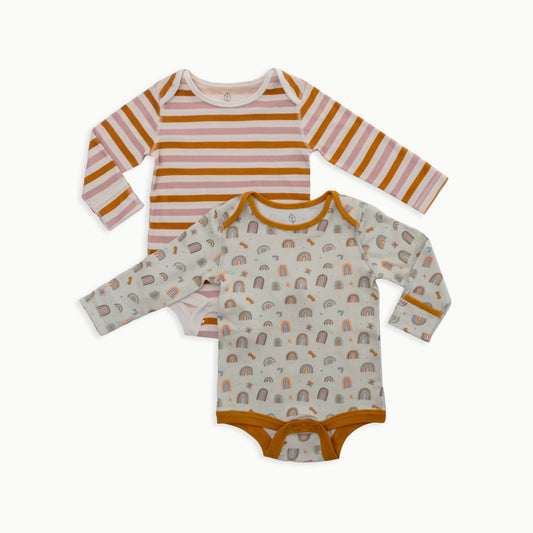
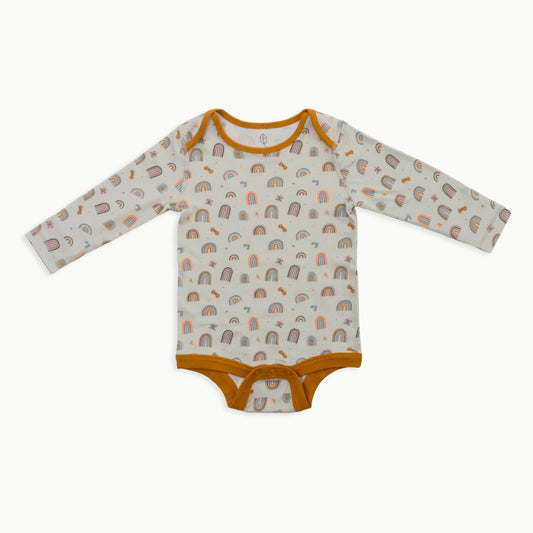
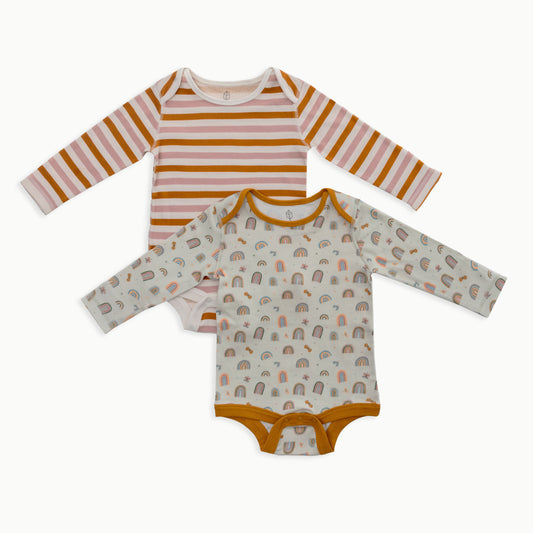
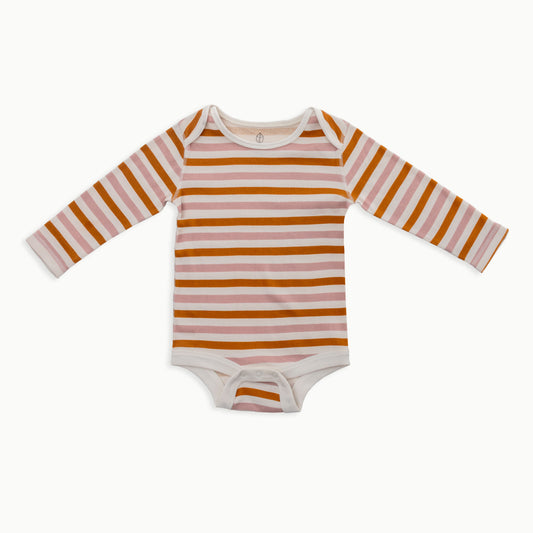
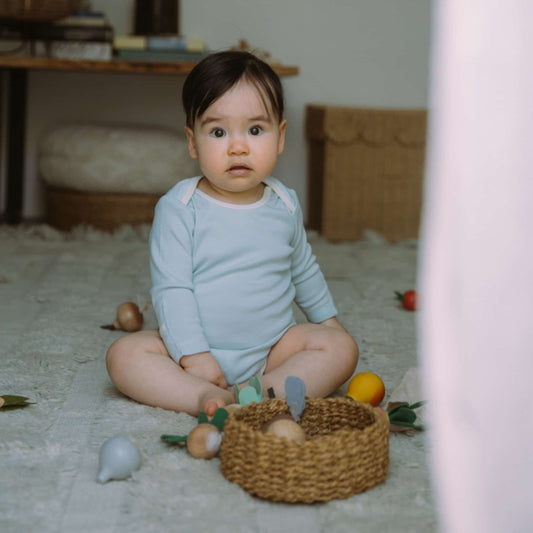
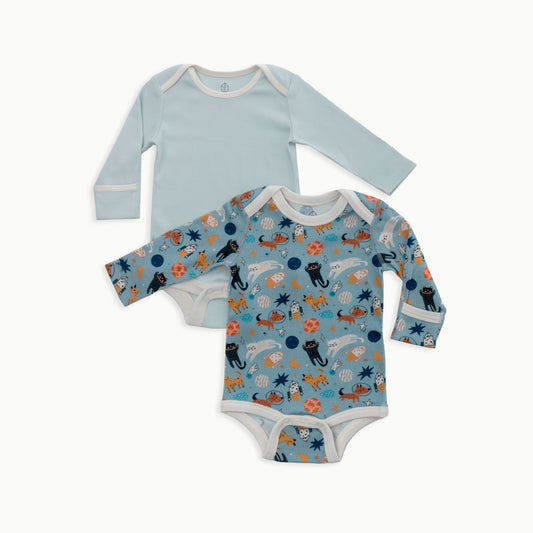
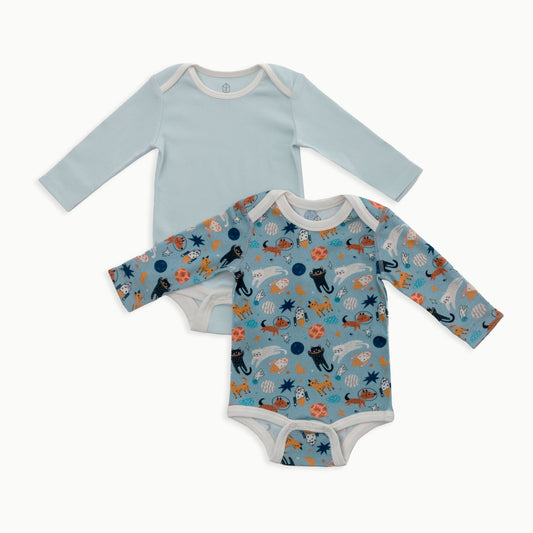
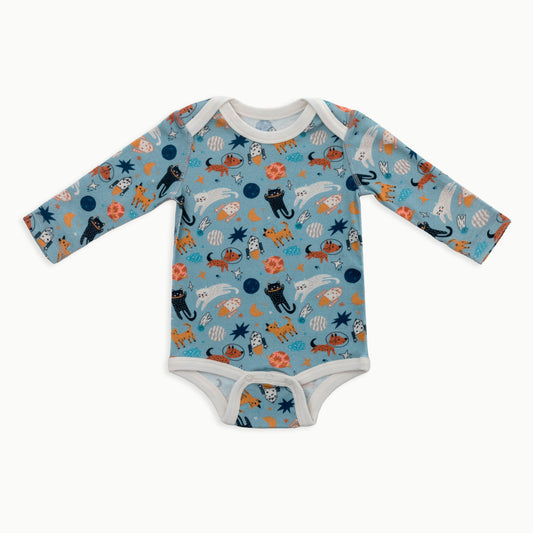
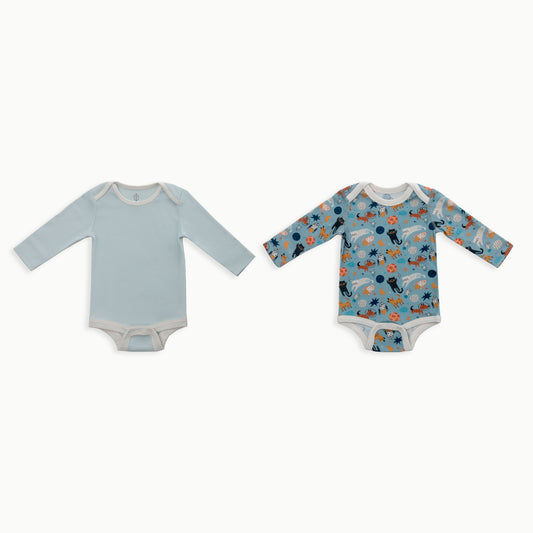
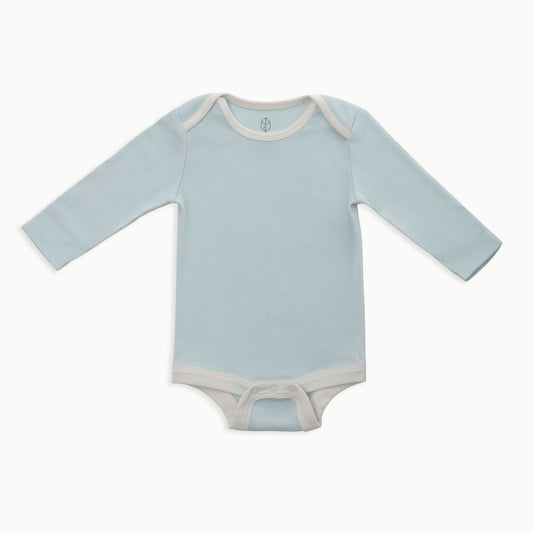
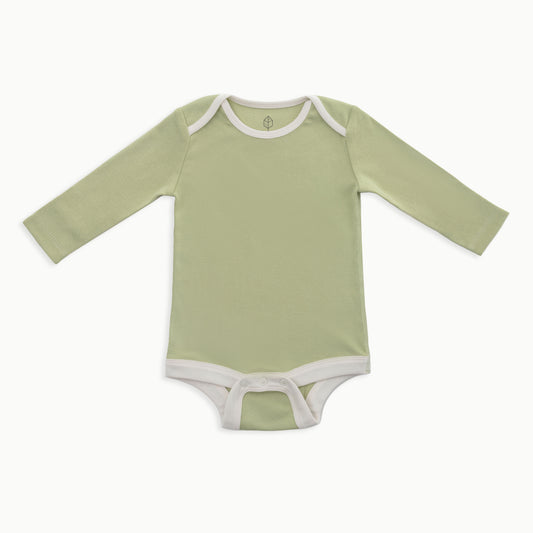
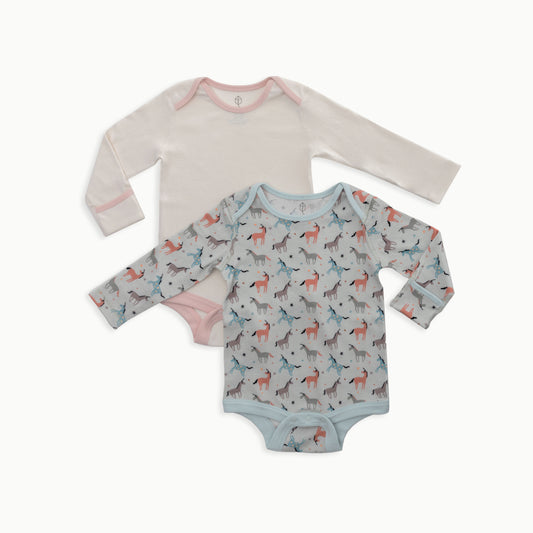
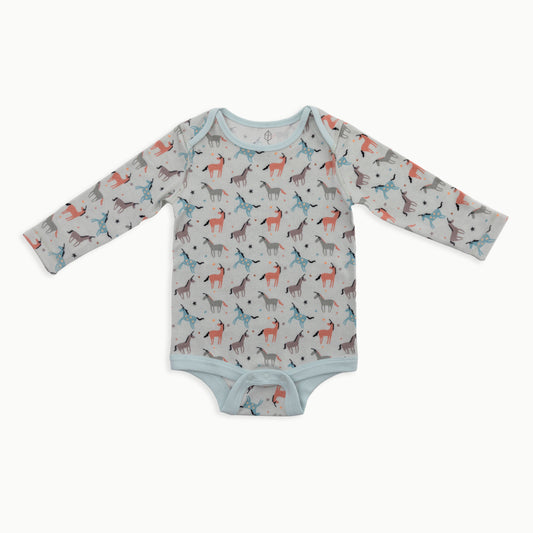
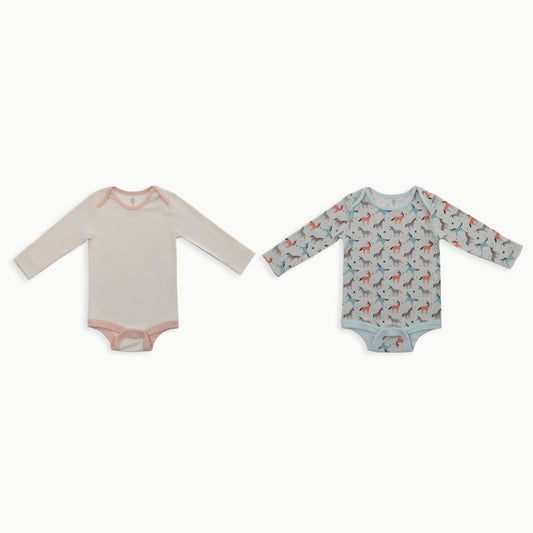
| Base layer | Soft, long-sleeve organic cotton bodysuit | Cool days, against the skin |
| Middle layer | Footed sleeper or comfortable two-piece outfit | When additional warmth is needed |
| Outer layer | Light cardigan or jacket | Chilly mornings and outdoor walks |
| Accessories | Hat, socks or booties | Outdoors when conditions call for them |
These are options to combine according to the weather, rather than four things your baby needs to wear simultaneously throughout fall.
1. Start with a breathable base layer
The base layer is particularly important because it sits directly against your baby's skin, often for hours at a time.
I prefer 100% GOTS-certified organic cotton for this layer because it's soft, breathable and comfortable against sensitive skin. Cotton absorbs moisture, which can help with comfort, although damp cotton also loses some of its insulating ability, so wet clothing should always be changed promptly.
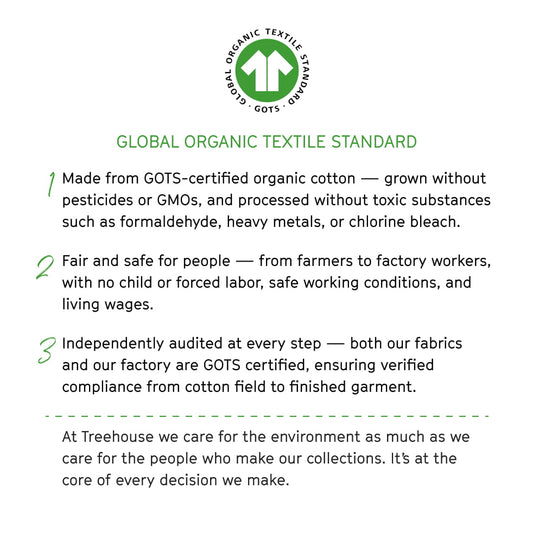
GOTS certification matters for reasons beyond the fiber itself. It sets requirements for textile processing, including restrictions on certain hazardous chemicals, dyes and finishes, as well as environmental and social criteria throughout certified production.
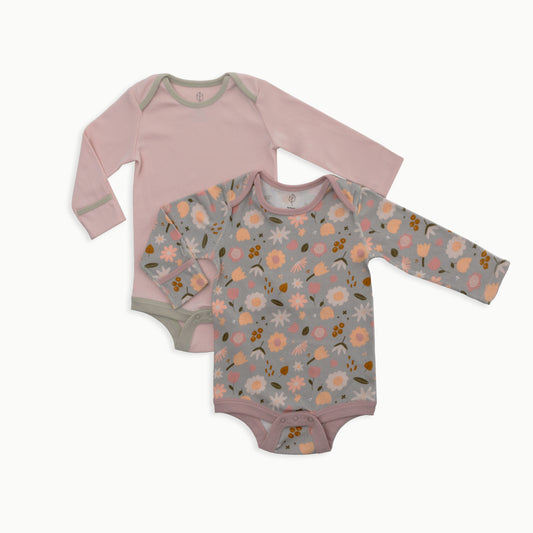
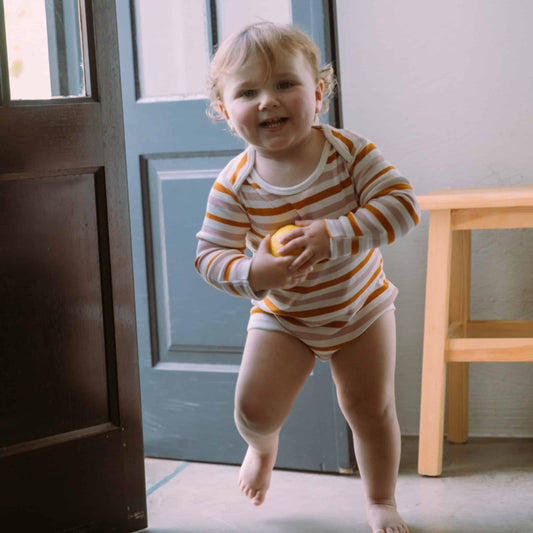
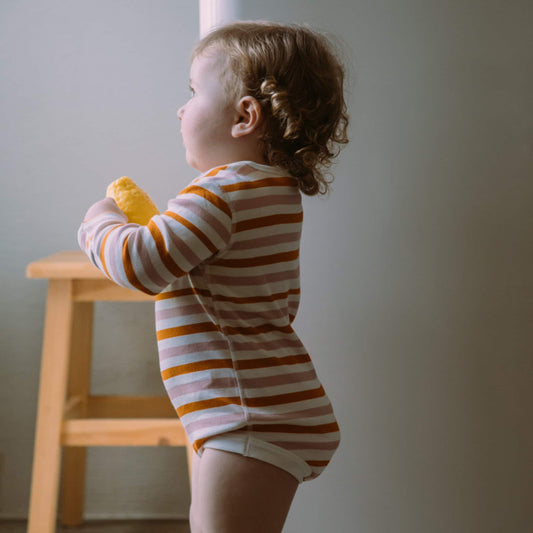
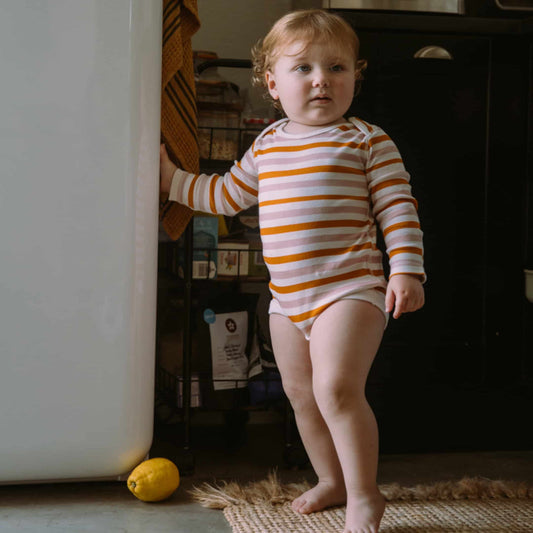
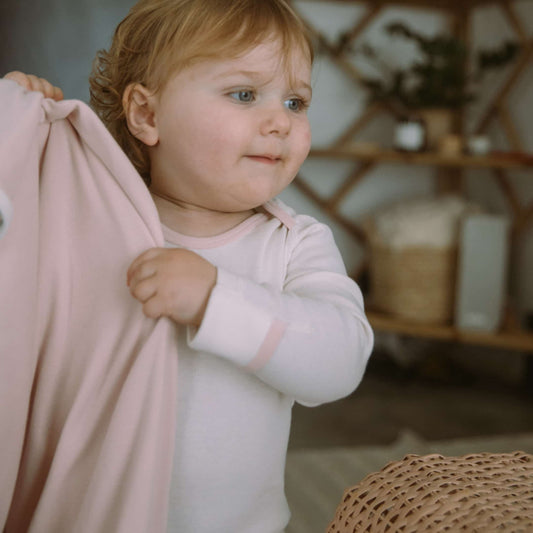
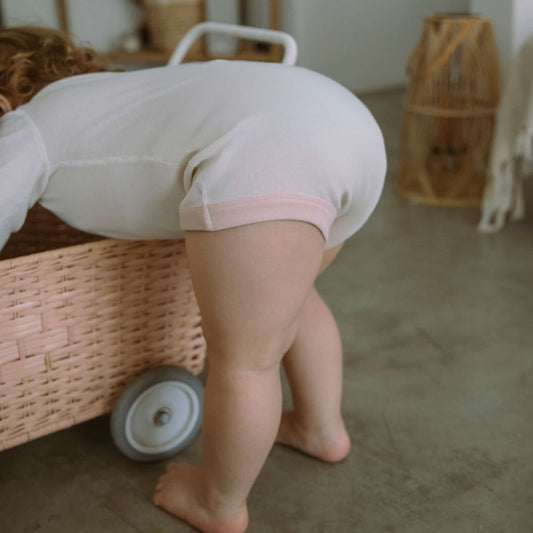
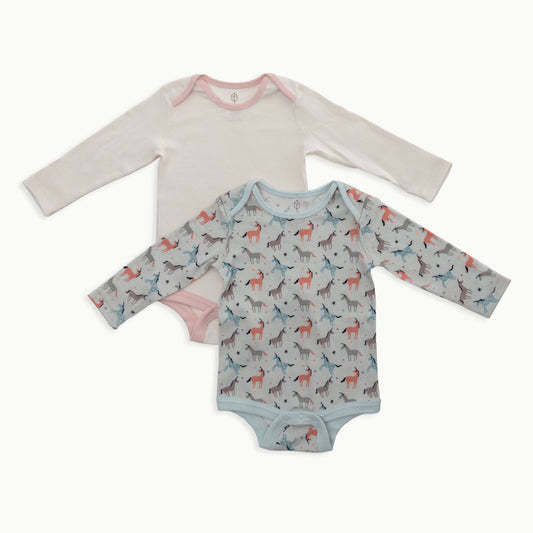
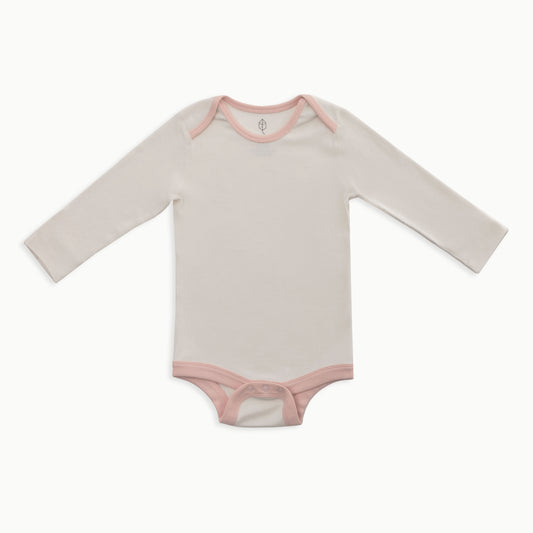
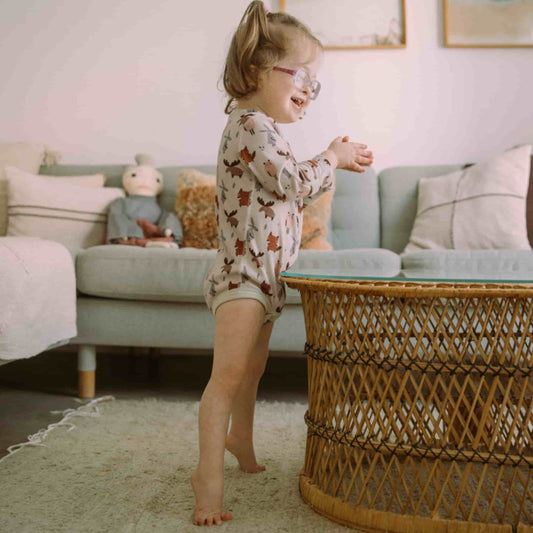
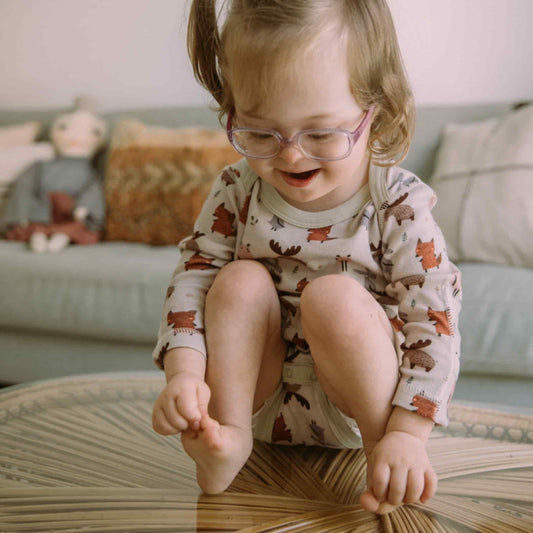
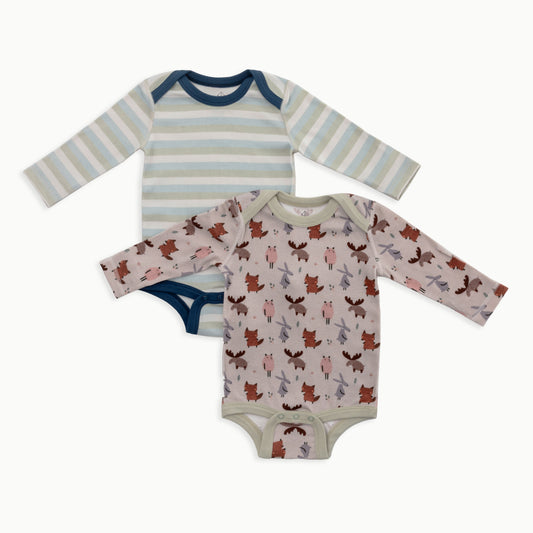
For fall, a long-sleeve bodysuit is an excellent starting point, particularly for babies who spend much of their day in heated indoor environments. On milder days, a bodysuit with comfortable pants may be all they need.
You can explore our organic cotton baby clothes, designed with softness and everyday comfort in mind.
2. Add a comfortable middle layer
On cooler days, a footed sleeper can provide additional coverage without the need to constantly retrieve socks that your baby has managed to remove.
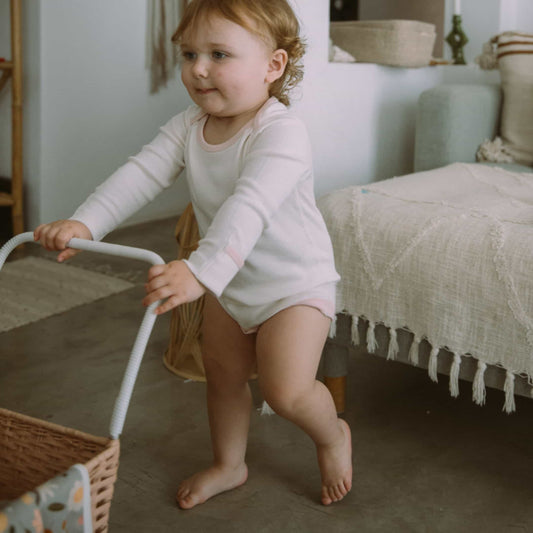
For babies who are crawling or beginning to walk, a two-piece outfit can be more practical, particularly if you expect to adjust layers throughout the day.
The main consideration is comfort. A middle layer should allow your baby to move freely, without tight waistbands, scratchy seams or unnecessary bulk.
A thick fleece outfit might look reassuringly warm, but it can become uncomfortable surprisingly quickly when you move into a heated room. Several thinner layers are generally easier to adjust than one very thick garment.
3. Keep the outer layer removable
A cardigan or lightweight jacket is useful for colder mornings, particularly when your baby is sitting relatively still in a stroller.
Look for something you can remove without having to undress your baby completely. This sounds obvious until you're standing in a grocery store attempting to extract a sleeping infant from a complicated outfit.
For genuinely cold or windy conditions, additional protection may be necessary, but fall outerwear should be chosen according to the actual weather rather than the calendar.
4. Use accessories when they're needed
Hats, socks and booties are useful outdoors when temperatures drop, especially for younger babies who aren't moving around much.
Indoors, however, hats are generally unnecessary, and the AAP advises against hats on babies indoors after leaving the hospital because they can contribute to overheating.
A hat should also be removed before putting your baby down to sleep.
Warm Enough, Not Too Warm: Why Overheating Matters
Parents are understandably concerned about babies getting cold, particularly as temperatures begin to fall. Yet overheating deserves at least as much attention, especially during sleep.
The AAP identifies overheating as a risk factor for sudden infant death syndrome (SIDS) and advises parents to avoid excessive clothing and head coverings during sleep.
Its general recommendation is straightforward: dress your baby in no more than one layer more than you would wear in the same environment.
If you're comfortable indoors in a long-sleeve shirt, your baby probably doesn't need a thick fleece sleeper, cardigan and blanket on top.
This is a guideline rather than a precise formula, since age, activity, individual needs and the warmth of different fabrics all matter. A lightweight cotton bodysuit and a thick padded jacket are technically two layers, but they clearly don't provide the same warmth as two thin cotton garments.
The problem with fall is that parents often dress their babies for the coldest part of the day and forget to make adjustments as conditions change.
A baby who needed a cardigan during the morning stroller walk may be perfectly comfortable without it by noon. Once you enter a heated building, the extra outdoor layers should generally come off.
And while it's sensible to prevent a baby from getting chilled, piling on additional clothing isn't automatically safer.
How to Tell if Your Baby Is Too Hot or Too Cold
One of the most useful things a parent can learn is how to check their baby's temperature without relying on their hands and feet.
Cold hands are remarkably common in babies, even when the rest of their body is comfortably warm. Their circulation and temperature regulation are still developing, so their extremities can feel cooler than their torso.
The NHS and The Lullaby Trust recommend checking your baby's chest or the back of their neck instead.
Signs your baby may be too warm:
-
Their chest or the back of their neck feels hot.
-
Their skin is sweaty or clammy.
-
Their hair is damp with perspiration.
-
They appear flushed, particularly alongside other signs of overheating.
If you notice these signs, remove a layer and reassess how they feel.
Signs your baby may be too cold:
-
Their chest or tummy feels noticeably cool.
-
They seem uncomfortable or unsettled in a cool environment.
-
Their clothing feels damp or they've been exposed to cold conditions without adequate coverage.
Add a suitable layer and check again.
A baby's hands or feet feeling cool, on their own, aren't a reliable indication that they need more clothing.
It's also important to distinguish ordinary temperature discomfort from signs of illness. If your baby seems unusually lethargic, is difficult to wake, has breathing difficulties or has an abnormal body temperature, don't assume a clothing adjustment will resolve the problem. Babies under three months with a temperature of 100.4°F (38°C) or higher need prompt medical evaluation.
For more detail, we've written a separate guide to signs your baby is too hot while sleeping.
How to Dress Your Baby for Different Fall Activities
 The same baby may need several different combinations of clothing over the course of a single day. Here's how I'd approach the situations most parents encounter.
Going for a stroller walk
For a cool morning walk, start with a long-sleeve bodysuit, add a footed sleeper or comfortable outfit, and use a lightweight outer layer if the temperature warrants it.
A hat can help protect your baby's head from the cold, while a blanket tucked around the lower body can provide adjustable warmth.
The advantage of a blanket is that you can remove it quickly as the temperature rises, without disturbing the entire outfit.
Keep blankets away from your baby's face and make sure they don't obstruct airflow around the stroller. Avoid covering the stroller opening with a blanket, particularly when using a rain cover or other enclosure, since heat can accumulate inside.
If your baby is in a carrier against your body, remember that your own body heat provides additional warmth. They may need fewer layers than they would in a stroller.
Traveling in a car seat
This is one of the most important fall clothing rules, and it's surprisingly easy to overlook.
Never put a bulky coat or padded snowsuit underneath your baby's car-seat harness.
In a collision, thick padding can compress under the force of the impact, leaving the harness looser than it appeared when you buckled your baby in.
The AAP recommends dressing babies in thin, close-fitting layers, securing the harness snugly and then placing a blanket or coat over the straps for additional warmth.
The sequence matters: clothing first, harness second, extra warmth on top.
Once the car warms up, remove the blanket if your baby no longer needs it.
Spending time indoors with the heating on
If your home is comfortably heated, there's generally no reason to dress your baby as though they're still outdoors.
A long-sleeve bodysuit with pants or a lightweight sleeper may be sufficient, depending on the room temperature.
Remove hats and unnecessary outer layers when you come inside, and check your baby's chest if you're unsure whether they're comfortable.
Remember that indoor temperatures can vary considerably between homes. A drafty older house and a modern apartment with central heating are very different environments, even if the outdoor temperature is identical.
Sleeping during cooler fall nights
Sleep requires particular attention because overheating is associated with an increased risk of SIDS, and babies cannot remove their own layers when they become uncomfortable.
The Lullaby Trust recommends a room temperature of approximately 61–68°F (16–20°C) as a comfortable range for babies, alongside appropriate bedding or sleep clothing.
However, there isn't one universal outfit that works at every temperature.
A long-sleeve cotton bodysuit and footed sleeper may be appropriate in some cooler rooms, while other babies will be more comfortable in a sleeper alone or with a correctly sized, appropriately rated wearable sleep sack.
Check the manufacturer's temperature guidance for sleep sacks, since their insulation varies considerably.
Avoid loose blankets, hats, pillows and other soft items in your baby's sleep space. The AAP recommends a firm, flat sleep surface with a fitted sheet and no loose bedding.
For a more detailed breakdown, see our guides to how to dress a baby for sleep and the ideal temperature for a baby's room.
What Baby Clothes Are Actually Worth Buying for Fall?
If you're putting together a fall wardrobe for your baby, I'd prioritize versatility over quantity.
Babies grow quickly enough without having to buy an entirely new wardrobe every time the weather changes. A few well-made pieces that work across different temperatures are generally a better investment than a collection of thick seasonal outfits with a very short window of usefulness.
These are the pieces I'd prioritize.
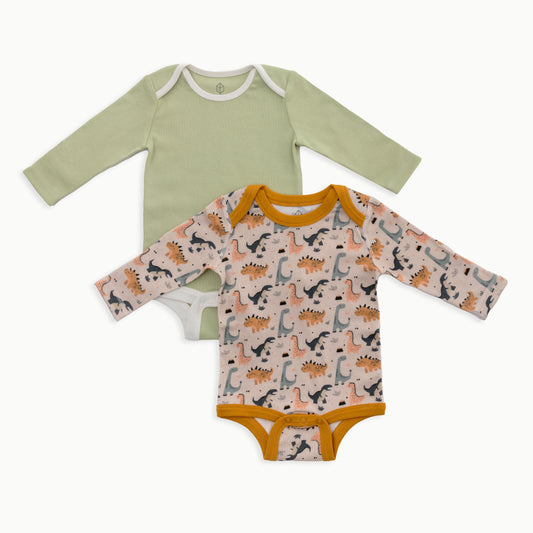
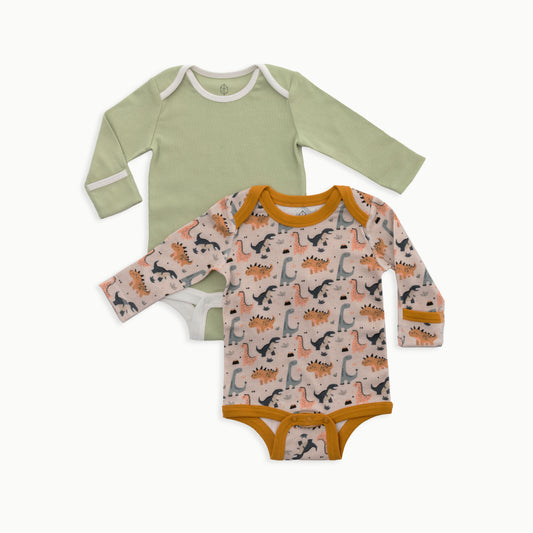
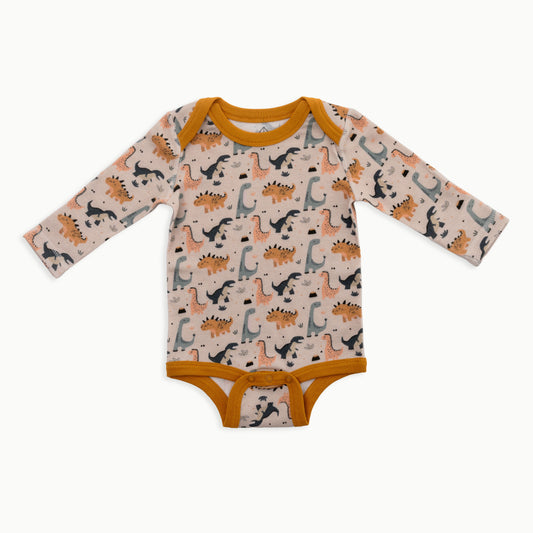
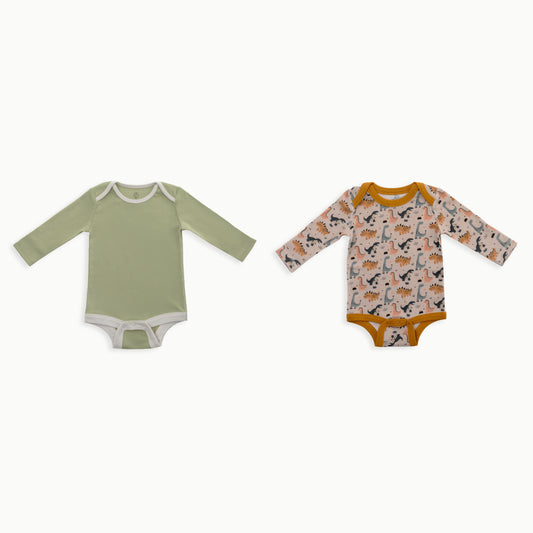
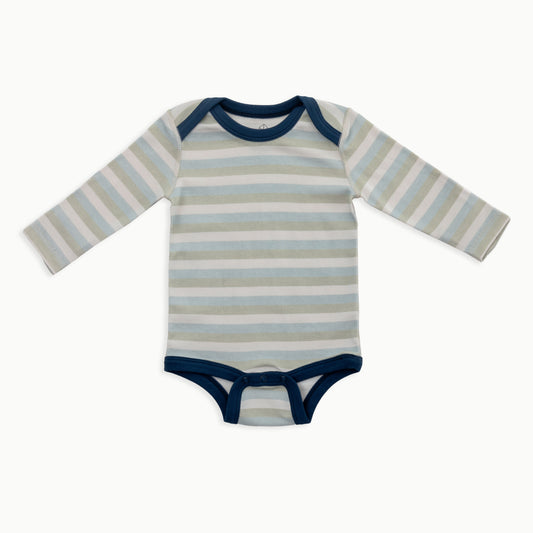
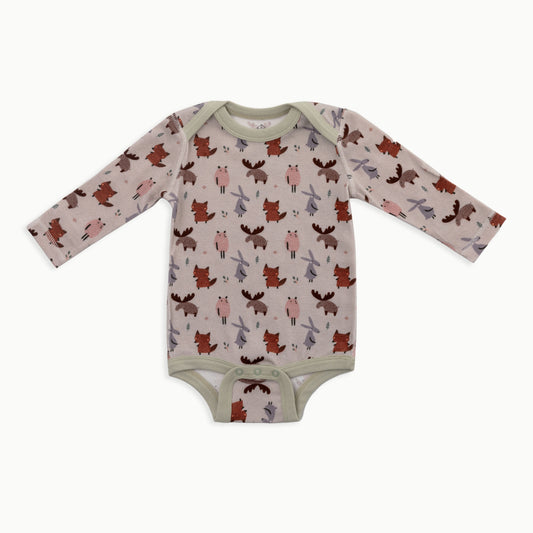
Long-sleeve bodysuits: Probably the most useful starting point for fall. They can be worn alone with pants on milder days or underneath a sleeper when temperatures drop. Look for breathable fabrics, comfortable neck openings and fastenings that make diaper changes straightforward.
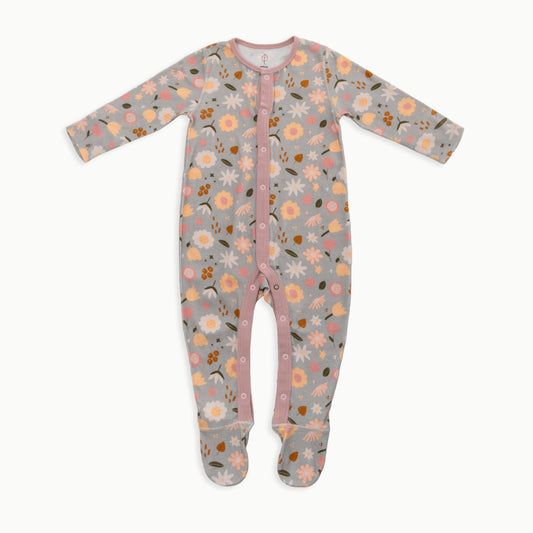
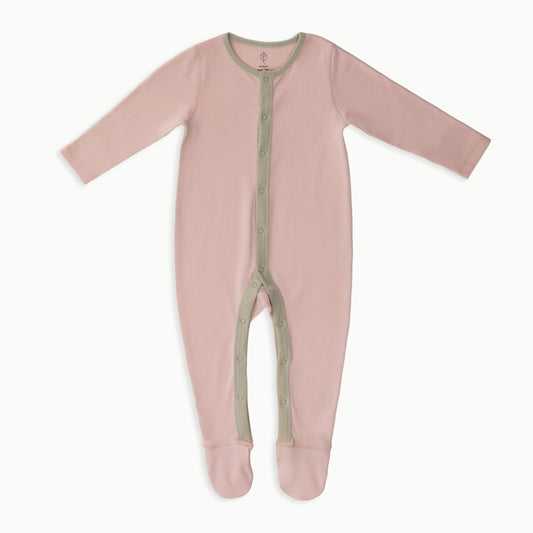
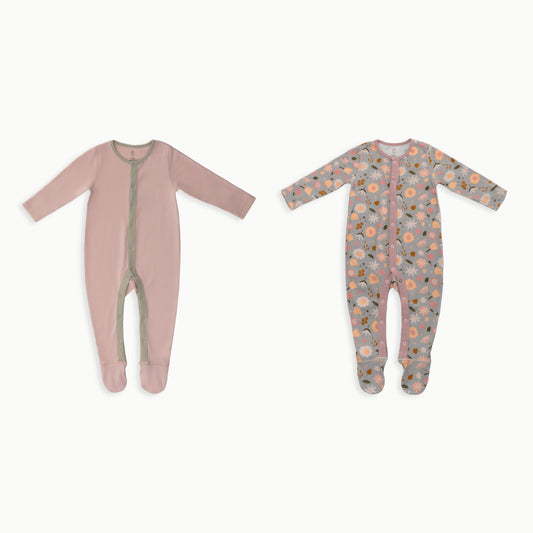
Footed sleepers: Particularly useful for newborns and younger babies, since they provide coverage from neck to toe without the need for separate socks. Choose a comfortable fit with enough room for movement and a zipper that makes nighttime changes easier.
Soft socks: Useful for babies wearing pants or outfits without enclosed feet. Avoid overly tight elastic around the ankles, and pay attention to fiber composition, particularly if your baby has sensitive skin.
A lightweight cardigan or jacket: One practical outer layer is often sufficient for milder fall weather. As temperatures drop further, you may need something warmer, but avoid buying heavy outerwear simply because it's October.
A comfortable hat: Useful for outdoor walks on chilly days, especially for younger babies. Choose one that fits securely without covering the eyes or slipping over the face.
Why I prefer GOTS-certified organic cotton for baby layers
As the founder of Treehouse, I've spent years researching children's clothing, fabric composition and textile manufacturing, and one of the things I've learned is that the material listed on a clothing label tells you surprisingly little about how that fabric was processed.
Conventional cotton and organic cotton are both cotton fibers, but their production standards can differ significantly. GOTS certification goes further than simply requiring organically grown cotton. It also establishes requirements for textile processing, including restrictions on certain hazardous chemicals and manufacturing inputs.
For clothing that sits directly against a baby's skin, those additional standards matter to me.
At Treehouse, we make our baby essentials using 100% GOTS-certified organic cotton, with carefully considered construction and soft, comfortable finishes. Our long-sleeve bodysuits and footed sleepers are particularly useful for fall because they can be worn individually or layered as temperatures change.
You can shop our baby fall clothes collection, including breathable everyday essentials designed for comfort through changing seasons.
And if you're also dressing an older child, our kids' fall clothes offer the same emphasis on comfortable, practical layers.
When Fall Starts Feeling More Like Winter
There comes a point when an extra cardigan and a pair of socks are no longer enough, particularly in places where temperatures regularly drop below freezing.
As the weather gets colder, the same layering principles still apply, but you'll need to consider more substantial insulation, protection from wind and precipitation, and the length of time your baby will spend outdoors.
A five-minute walk from the car to a building is very different from an hour-long stroller outing in freezing temperatures.
For genuinely cold weather, see our more detailed guide on how to dress a baby for winter.


