Anastasia Vasilieva is a sustainable fashion researcher and founder of Treehouse, a certified organic kidswear brand. Her work on non-toxic clothing has been featured in podcasts, press, and guest lectures at FIT and Georgetown.
Covered for Sleep
Breathable organic cotton for the base layer and the blanket stage.
Swaddles, sleep sacks and blankets do the same job but at different stages: they keep a baby warm while they sleep. The important difference is when each one is safe to use.
For most babies, the timeline is fairly simple. A swaddle can be used from birth until the first signs of trying to roll. An arms-free sleep sack can be used from birth and becomes particularly useful once swaddling has to stop. Loose blankets stay out of the crib until after 12 months.
The point at which you stop swaddling is the one worth remembering. The American Academy of Pediatrics (AAP) says to stop as soon as a baby shows signs of trying to roll, which can happen as early as 2 months. It is your baby's development, rather than a date on the calendar, that determines when the swaddle needs to go.
At Treehouse we don’t sell swaddles or sleep sacks, so we have no particular horse in that race. We make the breathable organic cotton layers babies wear underneath them, and blankets for later. This guide is simply about what belongs where, and when.
The Quick Answer: A Timeline, Not a Debate
There is more overlap between these three options than most comparisons suggest.
Swaddle: From birth until the first signs of trying to roll.
Sleep sack: From birth, or whenever you decide to move away from swaddling. An arms-free sleep sack can continue well into toddlerhood as long as it fits correctly.
Blanket: After 12 months. Before then, the AAP recommends keeping loose blankets and other soft bedding out of a baby's sleep space.
A newborn does not need to be swaddled before moving into a sleep sack. Some babies like being swaddled and settle well in one; others are perfectly happy sleeping with their arms free from the beginning.
What isn't optional is the stopping point. Once a baby starts showing signs of trying to roll, swaddling stops.
The Swaddle: Birth Until the First Signs of Rolling
A swaddle wraps a newborn snugly with their arms held against their body. Some babies find this calming, and the AAP notes that, when done correctly, swaddling can help babies settle and sleep.
It does, however, have a very definite expiry point.
The moment your baby shows signs of trying to roll, stop swaddling. This can happen as early as 2 months, according to the AAP, although every baby develops at a different pace.
The reason is fairly straightforward. A baby who rolls onto their stomach while their arms are restrained may not be able to use their arms to push themselves up or reposition themselves. This increases the risk of suffocation. A swaddled baby should therefore always be placed on their back to sleep.
It is also worth clearing up one surprisingly persistent misconception about swaddling. It may help some babies settle, but there is no evidence that swaddling itself reduces the risk of SIDS. Think of it as a comfort tool, not a safety measure.
Some babies love being swaddled. Others appear to really hate it. There is no advice to swaddle a newborn who sleeps happily without one.
The Sleep Sack: From the Swaddle Transition Through Toddlerhood
A sleep sack, also called a wearable blanket, keeps the body covered while leaving the arms free. It gives babies warmth without putting loose bedding into their sleep space.
Unlike a swaddle, there isn't a particular developmental milestone at which a sleep sack suddenly has to disappear.
An arms-free sleep sack can be used from birth. It can also be used after a baby begins rolling because their arms remain free to move. The AAP says this type of wearable blanket can continue to be used for as long as you want, provided it fits properly.
That makes it a particularly useful bridge between the newborn swaddling stage and the point at which a child is old enough to sleep with a loose blanket.
The fit is important. A sleep sack should be the correct size for your baby, particularly around the neck and arm openings, so that it cannot ride up over their face. This isn't something to buy several sizes too large on the basis that they will eventually grow into it.
Warmth matters too. Sleep sacks often come with a TOG rating, which tells you how insulating the garment is. A higher TOG does not mean a better sleep sack; it simply means a warmer one. The right choice depends on the temperature of the room and what your baby is wearing underneath.
One category to avoid altogether is weighted sleep products. The AAP advises against weighted swaddles, weighted sleep sacks, weighted sleepers and weighted blankets for babies.
Treehouse doesn't make sleep sacks. We do make theorganic cotton baby clothes that can be worn underneath one, which brings us to a part of this conversation that tends to get considerably less attention.
The Blanket: Only After 12 Months
A loose blanket should stay out of a baby's crib for the first year.
The AAP recommends keeping blankets and other loose or soft bedding away from a sleeping baby because they can cover the face and increase the risk of suffocation. During those first 12 months, appropriate sleep clothing or a wearable blanket can provide warmth without adding loose bedding to the crib.
After 12 months, most experts consider these objects to pose little risk to healthy babies.
That doesn't mean a blanket suddenly becomes necessary on a child's first birthday. A toddler who is comfortable in a sleep sack can continue wearing one. There is no prize for graduating to a blanket particularly early.
When you do introduce one, choose something lightweight and breathable rather than a heavy covering.
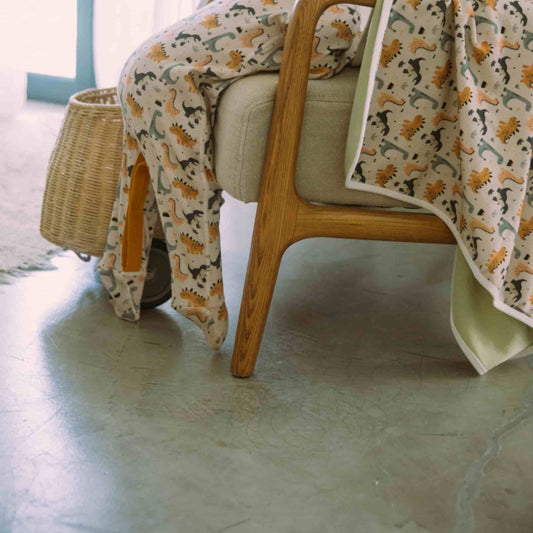
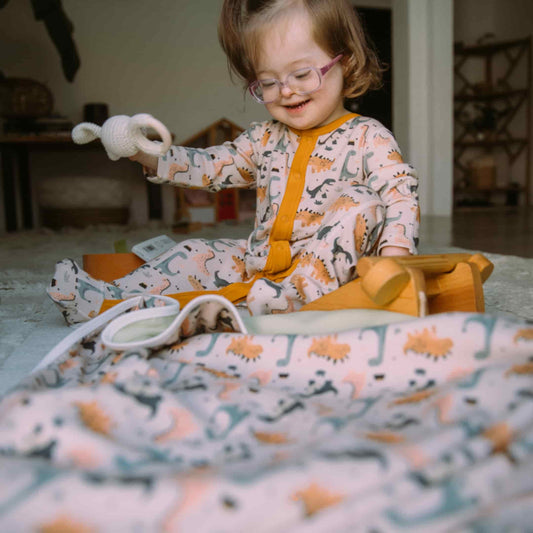
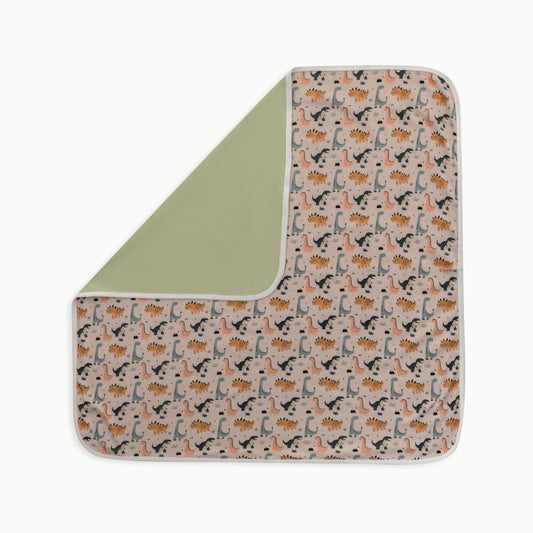
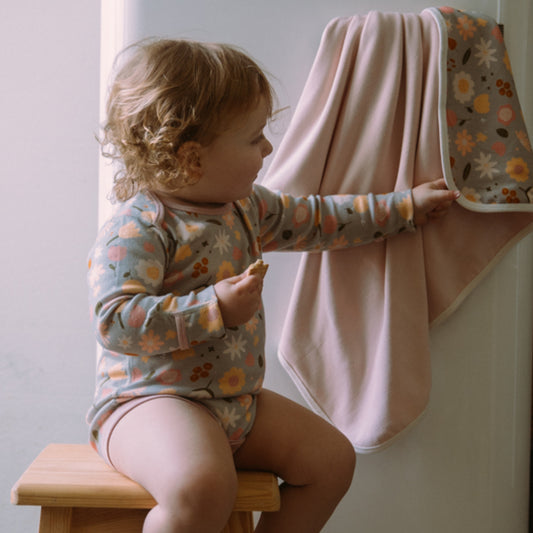
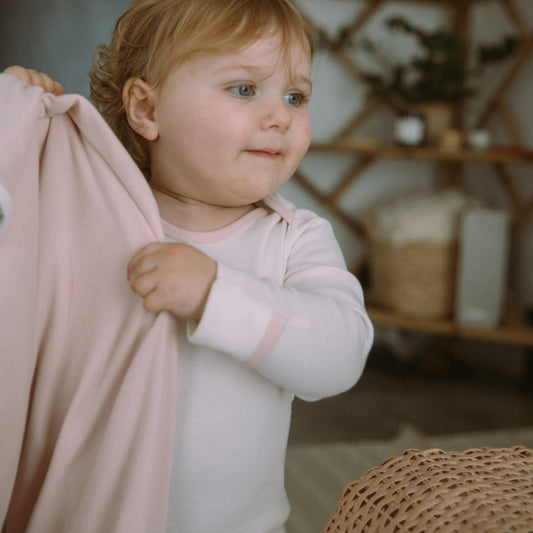
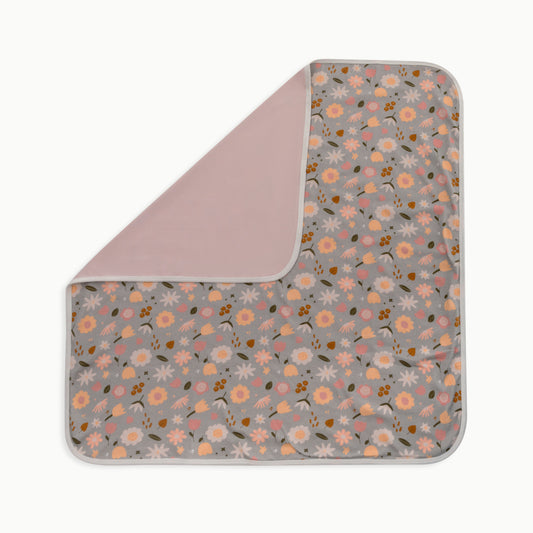
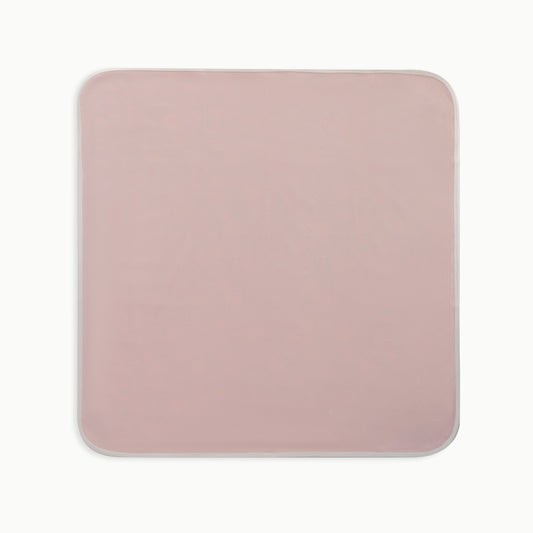
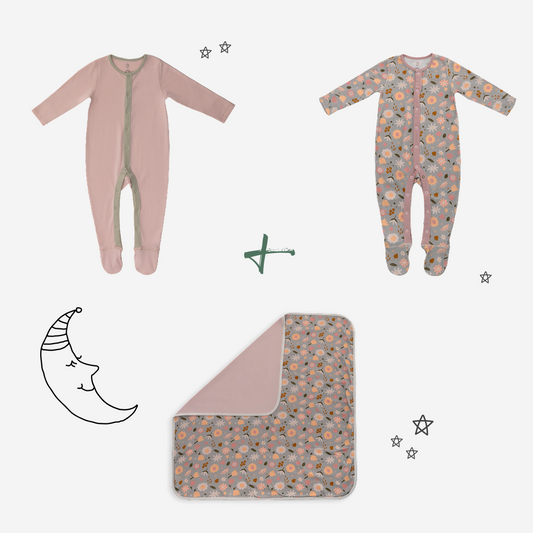
Once your little one is ready, these are two of our softest organic cotton blankets to start with. Both are lightweight, breathable GOTS-certified organic cotton, gentle enough for new skin and easy to layer once a blanket is safe to use.
The transition can be gradual or immediate. The safety rule stays the same.
Some parents start by leaving one arm out of the swaddle for a few nights, then both arms, before moving completely into an arms-free sleep sack. Others simply switch straight from a swaddle to a sleep sack.
There is no evidence that one of these approaches is safer than the other. The gradual version is simply a way of making the change less abrupt for a baby who is particularly attached to being swaddled.
What you shouldn't do is extend the swaddling stage once your baby has begun showing signs of trying to roll.
At that point, both arms need to be free and swaddling needs to stop. Continue placing your baby on their back at the beginning of every sleep.
What Your Baby Wears Underneath
This is arguably the more useful question once you have chosen the swaddle or sleep sack itself.
A sleep sack might be described as suitable for a particular room temperature, but it isn't being worn in isolation. The bodysuit, pajamas or sleeper underneath it are part of the same equation.
The AAP recommends dressing babies in approximately one layer more than an adult would wear comfortably in the same environment. Adding more layers simply because a baby's hands feel cold can easily result in overdressing.
Hands and feet are actually rather poor indicators of whether a baby is warm enough. The NHS and The Lullaby Trust recommend feeling your baby's chest or the back of their neck instead. It is completely normal for their hands and feet to feel cooler.
If the chest or back of the neck feels hot or sweaty, remove a layer.
Room temperature matters as well. The NHS and The Lullaby Trust recommend keeping the room where a baby sleeps at around 16–20°C (61–68°F). Overheating is something to avoid rather than compensate for with more bedding.
In many rooms, a breathable bodysuit or footed sleeper underneath the appropriate sleep sack will be enough. The exact combination will depend on the room temperature and the TOG of the sack.
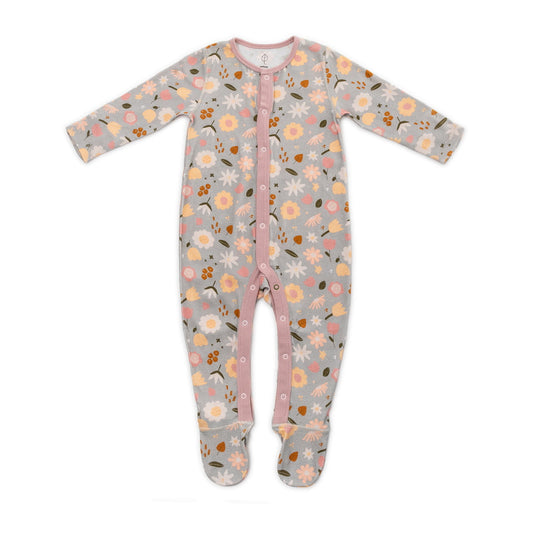
This is one reason we put so much emphasis on the fabrics used for the layer directly against a baby's skin. Our baby sleepers are made from breathable organic cotton and can be used as that base layer without adding unnecessary bulk.
There are a lot of products sold around baby sleep. The basic safety rules are considerably shorter:
Always place your baby on their back to sleep.
Stop swaddling as soon as your baby shows signs of trying to roll.
Keep loose blankets and other soft bedding out of the crib for the first 12 months.
Never use weighted swaddles, sleep sacks, sleepers or blankets for a baby.
Avoid overheating. A room temperature of around 16–20°C is recommended by the NHS and The Lullaby Trust.
Check your baby's chest or the back of their neck to judge their temperature rather than relying on their hands and feet.
During the first year, use appropriate sleep clothing or a wearable blanket for warmth rather than adding a loose blanket.
The Bottom Line
The distinction between the three is mostly about development.
A swaddle can be useful during the newborn stage, but it needs to go at the first signs of trying to roll. An arms-free sleep sack can be used from birth and continue long after swaddling ends. A loose blanket waits until after 12 months.
Of those milestones, the one worth committing to memory is rolling means no more swaddle. The AAP notes that signs of trying to roll can appear as early as 2 months, so don't rely on the age range printed on a product if your baby is telling you otherwise.
Whatever they sleep in, think about the whole combination rather than just the outer layer. The clothing underneath a swaddle or sleep sack contributes to warmth too, and adding more isn't necessarily better.
Our organic cotton baby clothes are designed as soft, breathable layers for exactly this part of the equation.
Frequently Asked Questions
When should I stop swaddling?
Stop swaddling as soon as your baby shows any signs of trying to roll. The AAP notes that this can happen as early as 2 months, so the important thing is to watch your baby's development rather than wait for a particular age. Once those signs appear, move to an option that leaves both arms free.
Can a newborn use a sleep sack instead of a swaddle?
Yes. An appropriately sized, arms-free sleep sack can be used from birth. Swaddling isn't a stage every newborn needs to go through first. Some babies settle better when swaddled; others are perfectly happy sleeping with their arms free.
Is a sleep sack safer than a swaddle?
It depends on the baby's developmental stage. A correctly used swaddle can be appropriate for a newborn who isn't showing signs of rolling. Once a baby begins trying to roll, however, swaddling needs to stop. An arms-free sleep sack allows the baby to use their arms if they roll, which is why it can continue to be used beyond the swaddling stage.
When can my baby have a blanket?
After 12 months. The AAP recommends keeping loose blankets and other soft bedding out of a baby's sleep space during the first year. Until then, use appropriate sleep clothing or a wearable blanket for warmth.
What should my baby wear under a sleep sack or swaddle?
A breathable bodysuit or footed sleeper may be all that is needed, depending on the room temperature and the warmth of the swaddle or sleep sack. The AAP recommends dressing a baby in approximately one layer more than an adult would comfortably wear in the same environment. Check the chest or back of the neck to see whether your baby feels comfortably warm rather than judging by their hands or feet.
Sources
American Academy of Pediatrics / HealthyChildren.org, “Swaddling: Is it Safe for Your Baby?” Guidance on swaddling, rolling, back sleeping and arms-free wearable blankets.
American Academy of Pediatrics / HealthyChildren.org, “A Parent's Guide to Safe Sleep.” Guidance on stopping swaddling, weighted sleep products, clothing and overheating.
American Academy of Pediatrics, “Safe Sleep and Your Baby.” Guidance on keeping loose bedding and soft objects out of an infant's sleep environment during the first year.
NHS, “Sudden infant death syndrome (SIDS).” Guidance on safer sleep, room temperature and checking a baby's temperature.
The Lullaby Trust, “Your Baby's Room Temperature.” Guidance on room temperature, overheating and checking the chest or back of the neck rather than the hands and feet.
This article provides general guidance rather than individual medical advice. Speak to your pediatrician or GP if you have concerns about your baby's sleep or health. In the UK, you can also contact NHS 111.
Our commitment to you extends beyond just the our clothing - we prioritize the well-being of your children, the environment, and the workers who craft our pieces.






 A swaddle wraps a newborn snugly with their arms held against their body. Some babies find this calming, and the AAP notes that, when done correctly, swaddling can help babies settle and sleep.
 A loose blanket should stay out of a baby's crib for the first year.


