










Why Quality Matters More in Kids' Clothing Than Adult Clothing
Children’s clothing lives a far harder life than adult clothing. Studies estimate that children’s garments are washed two to three times more frequently than adult garments because of spills, sensory issues, outdoor play and faster outfit turnover. Every construction flaw gets exposed faster.
A weak neckline that might survive years on an adult t-shirt often becomes stretched and wavy within weeks on a child’s tee. Cheap elastics twist inside waistbands. Thin fabrics develop holes at the knees and crotch. Poor seam construction starts unravelling under constant movement.

Kids’ skin is also thinner, more absorbent and more reactive than adult skin. Rough overlocked seams, scratchy tags, stiff synthetics and harsh finishing chemicals can trigger irritation, eczema flare-ups and sensory discomfort far more easily than they would in adults.
Then there is the economics of hand-me-downs. A well-made garment that survives one child and gets passed to a sibling immediately cuts its cost per child by roughly 50 percent. A cheap garment that pills, stretches and falls apart after one season costs 100 percent every single time.
The good news is that quality leaves clues. Whether you are shopping for pajamas, leggings, underwear or outerwear, the same construction principles apply across every category.
The 5-Point Quality Check
Most parents rely on brand names or price to judge quality. Neither is particularly reliable.
Some expensive children’s brands use the same lightweight fabrics and weak seam construction as fast fashion, just with better photography and larger markups. Meanwhile some smaller brands produce exceptionally well-made garments because they prioritise construction over marketing.
These five checks reveal more about a garment’s quality than almost anything else. Once you learn them, you stop gambling on clothing and start spotting quality immediately, both online and in person.
Stitch Density
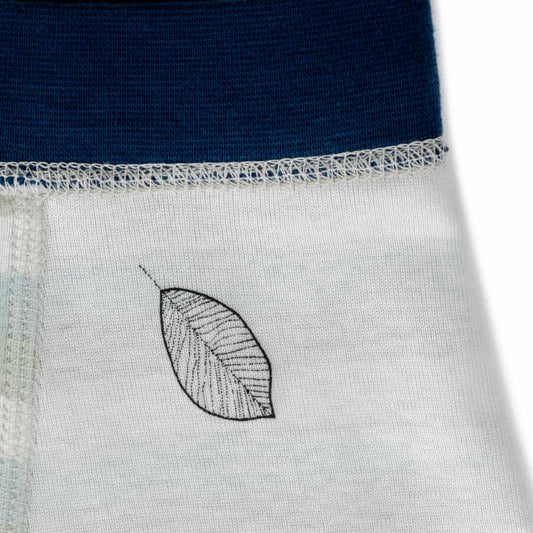
Cheap factories save money by using fewer stitches per inch. Fewer stitches mean weaker seams that split faster under tension. High quality kids’ clothing usually uses tighter, more even stitching, typically around 8 to 12 stitches per inch on structural seams.

This matters enormously for children because stress points experience constant movement. Knees bend thousands of times.
Waistbands stretch repeatedly. Crotch seams take constant pressure during climbing and crawling.
Online, zoom into product images. If a brand avoids close-up construction photos entirely, that is often a warning sign.
Stitch density is one of the hardest quality signals to fake because it directly affects production time and cost.
Seam Type
Single-stitched seams are the cheapest option and the most likely to split. Basic overlocked seams are standard across most of the industry. Better garments use flat-felled seams or double stitching in high-stress areas because they are significantly stronger and far more resistant to fraying internally.
Flat-felled seams fold the raw fabric edge inside itself before stitching it down twice. This creates a smoother interior finish and dramatically improves durability. It is one reason good denim, workwear and premium children’s clothing lasts longer.

Quality brands reinforce specific zones intentionally, especially the crotch, knees, shoulders and underarms. Cheap brands often use the same weak seam construction everywhere.
Not all seams are created equally.
Fabric Weight (GSM)
GSM stands for grams per square meter and it is one of the strongest predictors of how long a garment will last.
Many mass-market kids’ t-shirts use fabrics around 120 to 140 GSM because thinner fabrics reduce costs. Unfortunately, thinner fabrics also pill faster, lose shape faster and develop holes faster.
High quality kids’ basics are usually closer to 180 to 220 GSM. They feel denser, softer and more stable after repeated washing.
In store, hold the fabric up to the light. If it becomes highly transparent, it is probably too thin for heavy everyday wear.

Online, good brands often list GSM in product descriptions. If the fabric specifications are vague, that is useful information too.
Better kids’ clothing is usually closer to 180–220 GSM.
Stretch Recovery
Stretch recovery tells you how a garment will behave after washing.
Gently stretch a section of fabric between your fingers and release it. High quality fabric snaps back into shape almost immediately. Poor quality fabric stays stretched, rippled or distorted.

This matters especially for necklines, cuffs and waistbands because these areas experience repeated tension. Poor recovery is why cheap collars start curling and cheap leggings develop baggy knees after a few wears.
Online, reviews mentioning “lost shape after one wash” or “stretched immediately” are major red flags.
High quality fabric snaps back into shape almost immediately.
Finishing Details
Finishing details are where cost-cutting becomes obvious fastest.
Check hems first. High quality hems are usually double-folded, even and cleanly stitched. Cheap hems are often uneven, crooked or single-folded with loose thread ends.
Check neck bindings. Good necklines lie flat and feel reinforced. Cheap ones curl after minimal washing.
Check buttons and snaps carefully. Quality garments reinforce buttons using cross stitching or bar tacks because loose buttons on children’s clothing are not just annoying. They are a choking hazard.
Then look at prints. High quality prints feel integrated into the fabric. Cheap plasticky prints sit heavily on top of the garment and crack after repeated washing.

Even online, finishing quality is usually visible if you zoom into collars, cuffs and seams closely enough.
Loose threads, curling necklines and cracking prints are major quality red flags.
The Fabric Test: What to Look For in the Material Itself
Fabric quality determines how clothing wears over time. Even well-made garments fail if the fabric itself is weak or poorly processed.
And “cotton” alone means very little. Low-quality cotton pills quickly, while dense long-staple organic cotton softens beautifully with wear.
Another overlooked issue: girls’ clothing is often made thinner and less durable despite children playing the same way.
When shopping for kids’ clothes, focus on fabric quality, durability and construction — not just aesthetics.
| The Signal | What Quality Looks Like | What Poor Quality Looks Like | How to Check Online |
|---|---|---|---|
| Fiber content | At least 95% natural fiber (organic cotton, linen, merino wool, bamboo) clearly listed on the label | Vague terms like "cotton-blend" without percentages, or synthetic content above 10% | Read the materials section carefully. If the site lists just "cotton" without a percentage, assume it's a blend. |
| Weave density | Tight, even weave with no visible gaps when held to light | Loose, see-through weave with irregular gaps | Look for close-up fabric shots. If the brand only shows flat lay photos, that's a red flag. |
| Hand feel (in person) | Soft, substantial, drapes smoothly. Softens further with washing. | Stiff, crunchy, plasticky. Often has a chemical smell out of the package. | Reviews frequently mention "soft" or "stiff" — search the word "soft" in reviews. |
| Dye quality | Even color throughout. No streaks, patches, or bleeding. Inside of garment matches outside. | Patchy dye, visible streaks, lighter color on the inside than the outside. | Look for customer photos rather than studio shots. Studio lighting hides dye issues. |
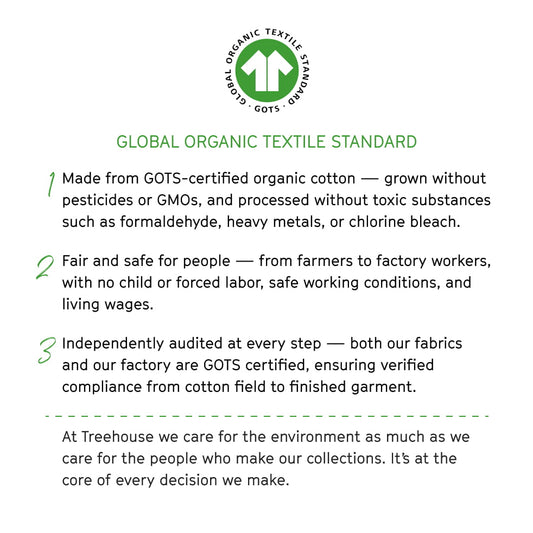
| Certifications | GOTS (organic standard + ethical labor), OEKO-TEX Standard 100 (tested free from 300+ harmful substances) | No certifications listed, or vague claims like "eco-friendly" or "natural" without proof | Look for certification logos on product pages. A legitimate brand lists the certifying body. |
| Smell test (in person) | Neutral, clean, slightly natural scent | Strong chemical, fishy, or petroleum smell — indicates finishing chemicals that haven't been washed out | N/A online — but customer reviews mentioning "smells weird" or "chemical smell" are red flags. |
Explore:


The Construction Test: How the Garment Is Put Together
Fabric matters, but construction is what determines whether a garment survives actual childhood.
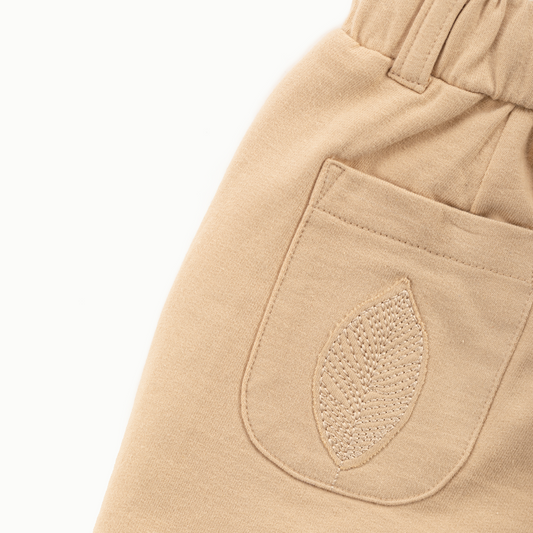
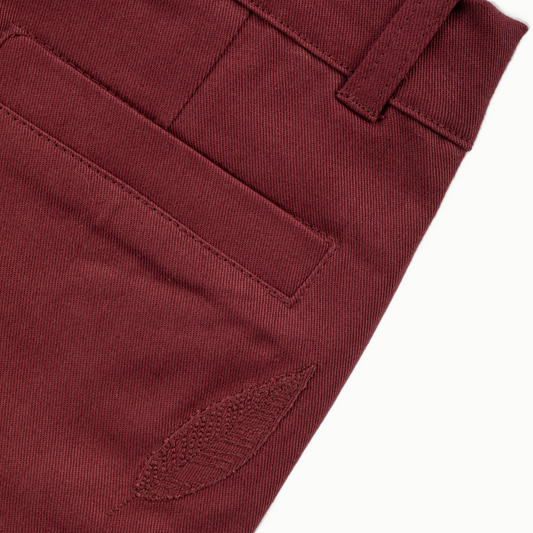
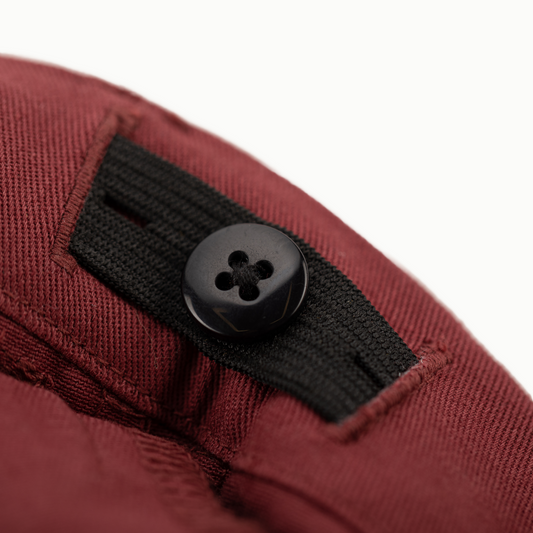
Look for wide secure waistbands, reinforced seams, functional pockets and durable stitching designed for movement and repeated washing.
Details matter too. Scratchy tags can cause sensory irritation, while stretched necklines are one of the clearest signs of poor-quality construction.
| What to Check | Quality Sign | Red Flag | Why It Matters for Kids |
|---|---|---|---|
| Seams | Straight, even, no loose threads. Flat on the inside so they don't rub skin. | Crooked, puckered, thread ends hanging, visible gaps between stitches | Kids' skin is thin — rough interior seams cause friction rashes, especially at the neck and waistband. |
| Stress points | Reinforced stitching at shoulders, crotch, knees, and underarms. Often double-stitched or bar-tacked. | No reinforcement — single row of stitches holding high-stress zones | These are the first areas to rip. On pants, the crotch and knees fail first. On tees, the shoulder and underarm |
| Neck binding | Clean, flat, reinforced binding that lies flush against the body | Thin, curling, stretched-looking neckline after even one wash | A curling neckline is the #1 sign of a cheap tee. Once it curls, it doesn't go back. |
| Waistbands | Soft, wide elastic that doesn't dig in. Stitched with multiple rows to prevent rolling. | Thin, narrow elastic that digs in and rolls over. Single row of stitching. | Kids dress themselves — a good waistband makes that possible. A bad one causes "the pants won't stay up" meltdowns. |
| Buttons & snaps | Firmly attached with reinforced (often cross-stitched) thread. Snaps sit flush and feel secure. | Buttons dangling after minimal wear. Snaps that detach with a firm tug. | For kids under 3, loose buttons and snaps are a choking hazard — this is a safety issue, not just durability. |
| Labels | Tagless print labels, or labels sewn into an external seam where they don't touch skin | Stiff, scratchy tags sewn directly into the neck or waistband | Scratchy tags are the single most common reason toddlers refuse to wear certain clothes. |
| Hems | Even, straight, double-folded. No visible raw edges. | Uneven, crooked, single-folded hems with visible fraying after one wash | A poorly hemmed garment will fray, unravel, and look worn out within weeks. |
Product example:
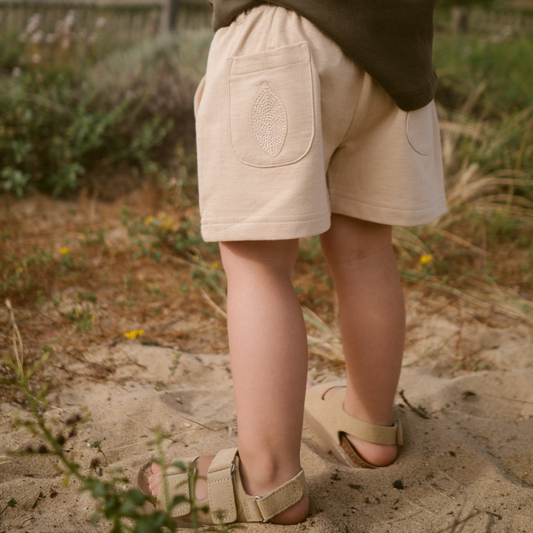
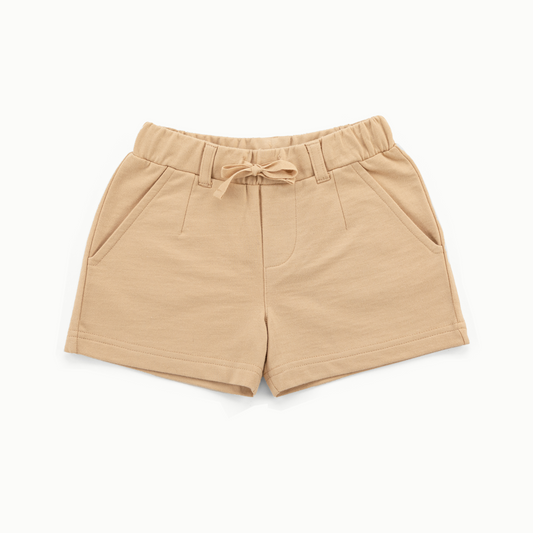
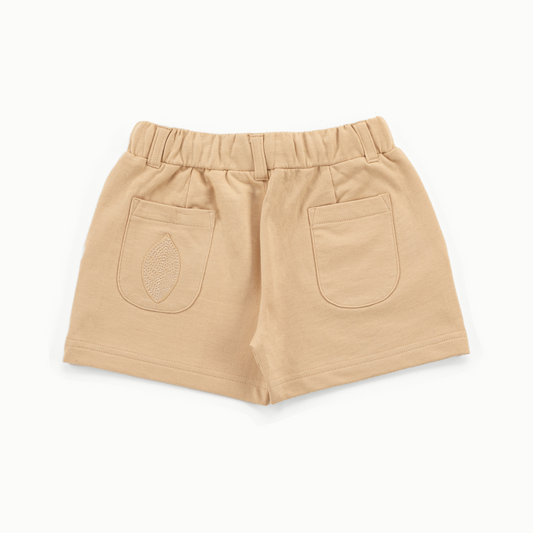
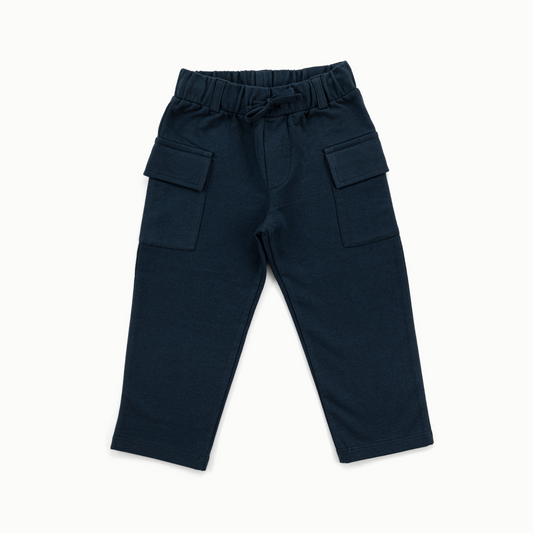
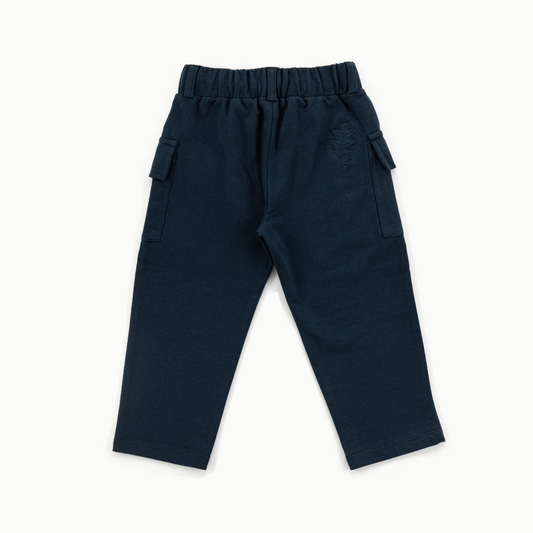
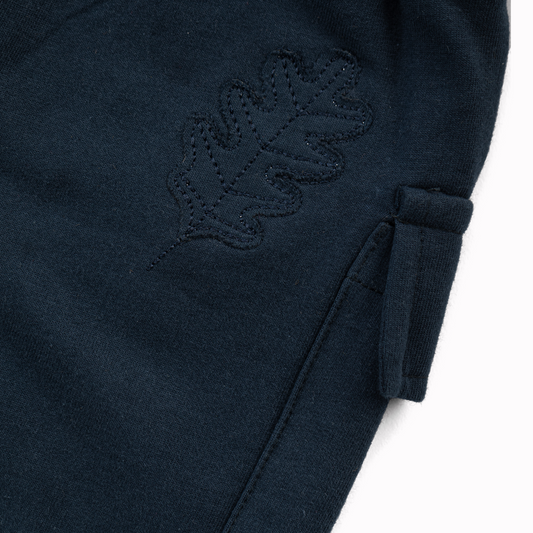
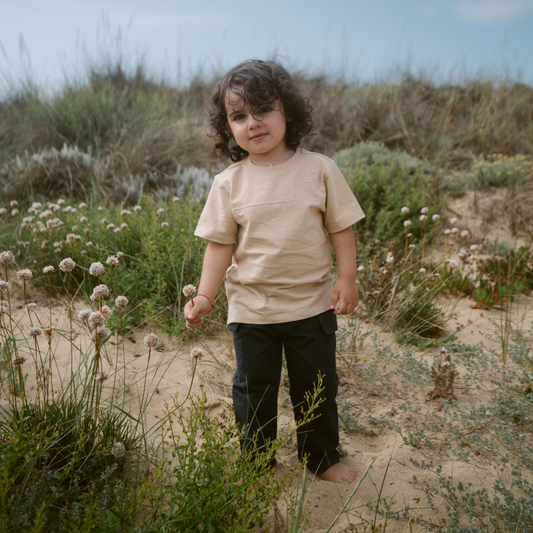
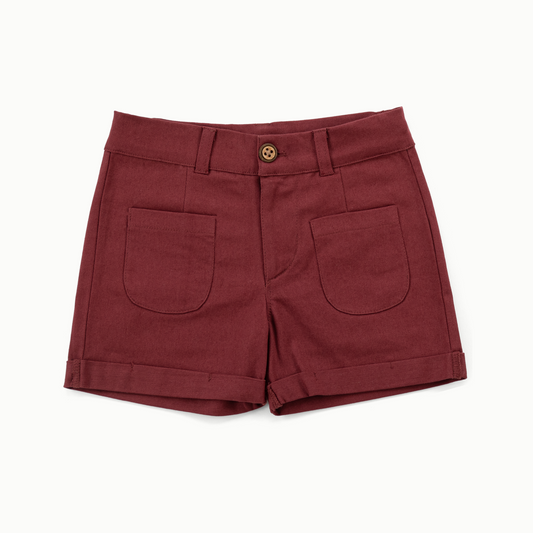
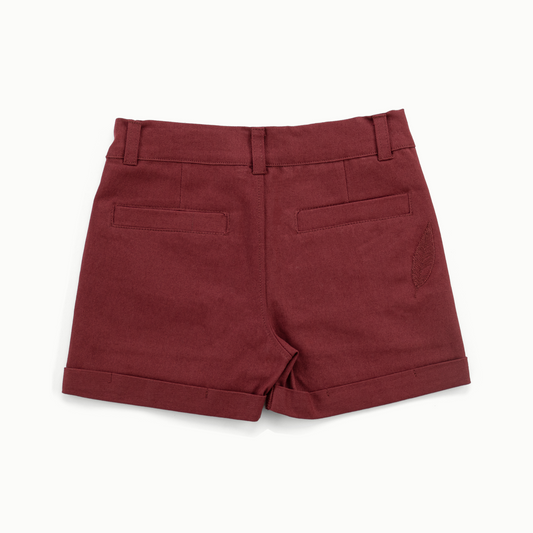
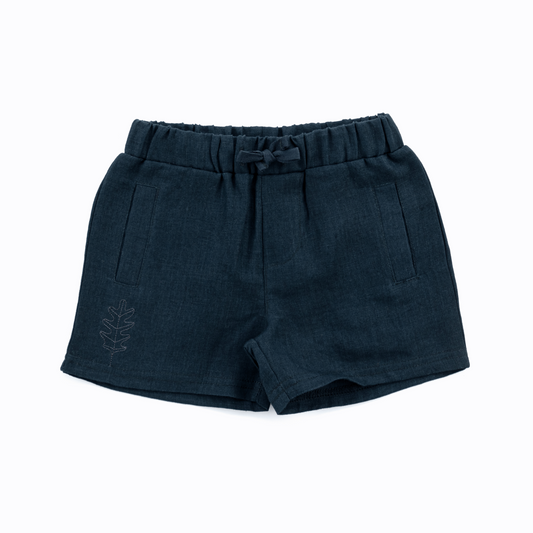
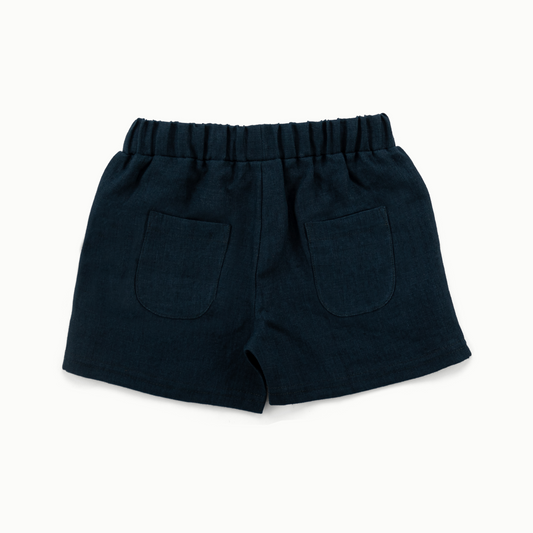
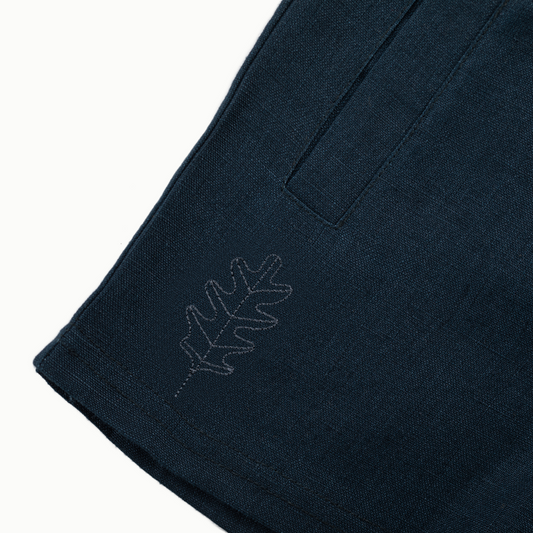
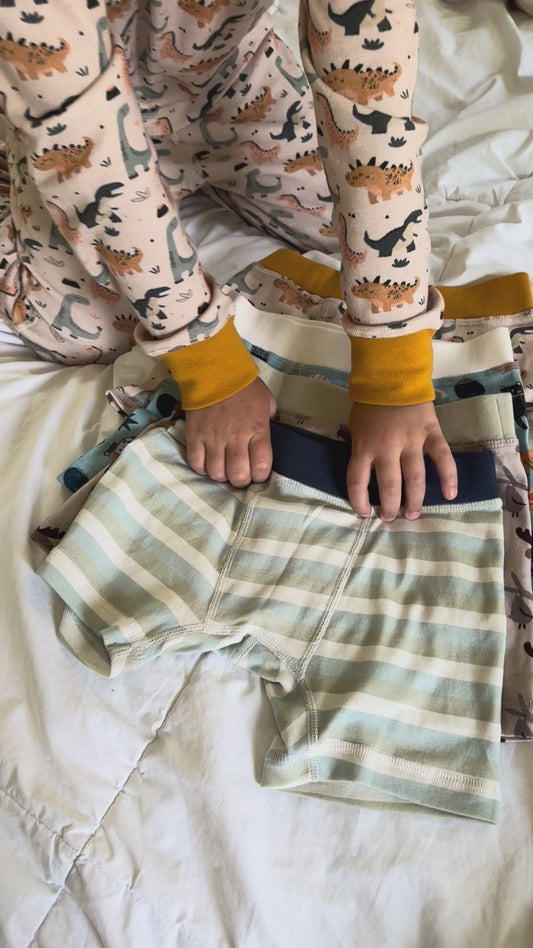
Oak Pants and Willow Shorts use reinforced crotch seams, flat-felled side seams and soft adjustable waistbands specifically designed to survive climbing, running and repeated washing.


What to Check When Shopping Online
Shopping online makes quality harder to judge, but not impossible.
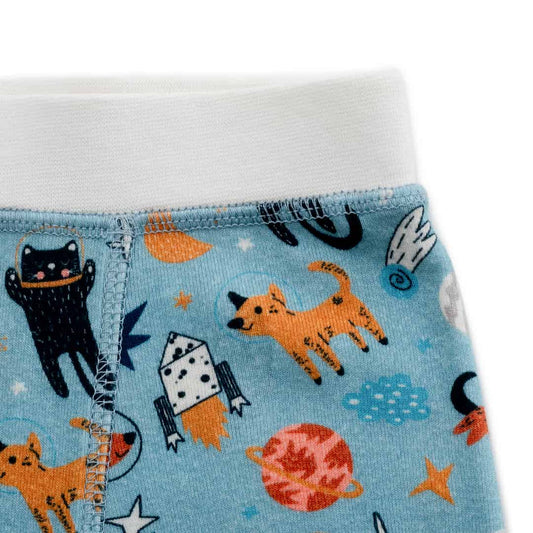
Zoom into every product image. Look for close-ups of seams, stitching, waistbands and collars. If a brand only shows wide lifestyle photography and avoids construction details entirely, that is useful information.
Read fiber compositions carefully. “Cotton blend” can mean almost anything. High quality brands usually specify exact percentages and certifications clearly.
Look for independent certifications rather than vague marketing language. Words like “eco-friendly” and “natural” have no legal meaning. GOTS and OEKO-TEX are independently audited standards.
Search reviews strategically. Terms like “shrunk,” “pilled,” “lost shape,” “rough,” “chemical smell” and “after washing” reveal far more than generic five-star reviews.
Customer photos are also far more useful than studio imagery because studio lighting hides loose threads, transparency and dye inconsistencies.
Finally, check the return policy carefully. Brands genuinely confident in quality usually stand behind their products.
The Cost-Per-Wear Math: Why Quality Is Cheaper
Fast fashion looks cheaper upfront. It rarely is long term.
An $8 t-shirt that pills and stretches after fifteen wears costs roughly $0.53 per wear.
A $32 high quality organic cotton shirt that survives one child plus a sibling can easily deliver 120 to 150 wears total, bringing the cost closer to $0.21 per wear.
And that does not include resale value.
Well-made kids’ clothing retains dramatically more secondhand value because the fabric, seams and structure actually survive long enough to be resold or passed down.
Parents often say, “But they grow so quickly.”
That is exactly why quality matters. After toddlerhood, children often remain in sizes for six to twelve months. A properly constructed garment should survive that entire period comfortably while still retaining enough life for another child afterward.
Related guides:


Red Flags That Should Stop You From Buying
- Strong chemical or petroleum smell
- No fiber percentages listed
- Vague terms like “eco-friendly” without certifications
- Thin fabric that becomes transparent under light
- Crooked hems or puckered seams
- Loose buttons or weak snaps
- Scratchy neck tags sewn internally
- No close-up construction photos online
- Reviews mentioning shrinking, pilling or twisting
- Extremely restrictive return policies
- Decorative girls’ clothing with no functional pockets or adjustable features
- Thin waistbands that visibly roll or twist
Common Quality Myths That Waste Parents' Money
Not necessarily. Many expensive brands prioritise branding and marketing over actual construction. The stitching tells the truth faster than the logo does.
Non-certified organic claims often are. Certified organic standards like GOTS are independently audited and regulate fibre sourcing, chemical processing and labour standards.
It is not. Long-staple cottons are smoother, stronger and far more resistant to pilling than cheaper short-staple cottons.
Good kids’ clothing is designed around exactly that reality. Reinforced seams, stronger fabrics and practical construction dramatically extend lifespan.
Often it is also constructed differently. Girls’ garments are frequently thinner, tighter and less functional despite identical activity levels. Better brands increasingly prioritise movement, comfort and durability equally across all children’s clothing.


